WAGNER: TRISTAN UND ISOLDE

Tristan probably is the most difficult and the longest tenor role in opera literature. Many tenors got burned out after performing this role and there have been very few tenors who have performed Tristan role on stage more than once. Therefore it is understandable why Placido Domingo never wanted to sing this role on stage. I doubt that he could have been more successful on stage than he is in this studio recording; especially considering the passion, and intensity he has put into this performance.

Domingo fans have been hoping for this recording for a long time. No doubt that this will be a historical recording, for many generations to enjoy.

Timur Sumer, MD
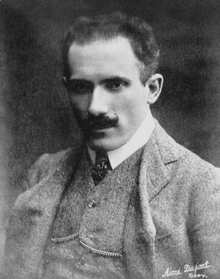
ARTURO TOSCANINI


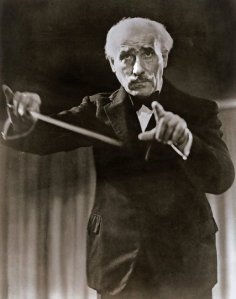
This DVD is an extraordinary visual and auditory experience for the Toscanini admirers.
Camera emphasis on Toscanini reveals maestro’s technical perfection, his communication skills and his authority, and turns this DVD into an education in conducting. Superimposed images of the conductor with orchestra members make this communicatition easy to appreciate for the viewer. Maestro’s repeated gestures such as touching his nose or mouth with his index finger to decrease the volume or occasionally resting his left hand on his collar at the chest level etc. are very interesting to watch.
Considering the date of recording, sound and picture quality are very good, with the exception of the second half of the Brahms concerto where the picture is fuzzy; this problem has been narrated before it occurs.
I found a few other aspects of this recording interesting: Orchestra’s seating lay out is very different than today’s orchestra seating pattern. Today’s conductors would have to exert a considerable effort orienting themselves to this pattern. Also of interest is, there are no women musicians in the orchestra. Unlike in most of the modern concert halls, orchestra members do not rise when the conductor walks on stage. I believe this attitude is much more civilized than the current practice.
I had read by some expert critics about Toscanini’s conducting style being, “fast”. I was unable to appreciate this criticism, until I watched this DVD; especially Brahms, Mozart and Beethoven. Nevertheless, I enjoyed the maestro’s style as is.
I am not a professional musician but only an enthusiast.
I watched only Volumes one and two of The Television Concerts and I am planning purchasing the rest.
Timur Sumer, MD

IRIS NEBULASI

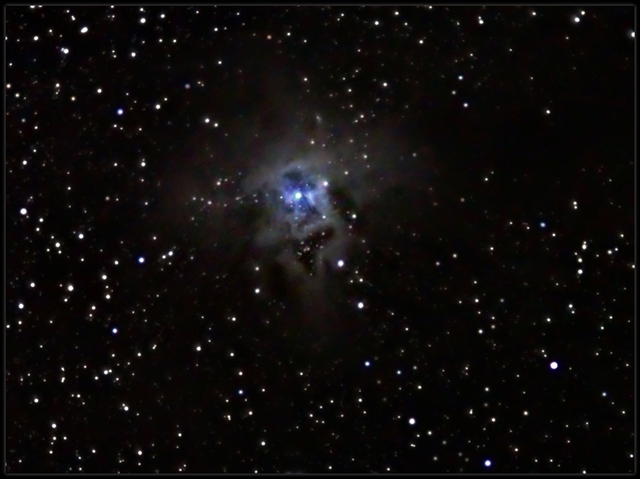
“İris” nebulası (NGC 7023) Cepheus yıldız kümesinin içinde, 1300 ışık yılı uzaklıktadır. Kutup yorugesinde olduğundan ufukta hiçbir zaman kaybolmaz (batmaz). Bir başka deyişle, yılın her günü kuzey yarım küresinden görülebilir. Şu sıralarda göğün kuzey-doğu yönünde gizlenmekte, ve ancak teleskopla gözlenmektedir. Bu görüntüler Michigan semalarından çekilmiştir.
Bahçemizden görüntülediğimiz iris çiçekleri ise yalnızca bahar aylarında açar. Çiçeklere bakınca, bu bulutsunun neden “iris” adını aldığını kolayca anlarsınız.
Timur Sümer

“İris” nebulası (NGC 7023) Cepheus yıldız kümesinin içinde, 1300 ışık yılı uzaklıktadır. Kutup yorugesinde olduğundan ufukta hiçbir zaman kaybolmaz (batmaz). Bir başka deyişle, yılın her günü kuzey yarım küresinden görülebilir. Şu sıralarda göğün kuzey-doğu yönünde gizlenmekte, ve ancak teleskopla gözlenmektedir. Bu görüntüler Michigan semalarından çekilmiştir.
Bahçemizden görüntülediğimiz iris çiçekleri ise yalnızca bahar aylarında açar. Çiçeklere bakınca, bu bulutsunun neden “iris” adını aldığını kolayca anlarsınız.
Timur Sümer


PAVAROTTI : WHEN HE WAS GOOD


When He Was Good

By TERRY TEACHOUT

Wall Street Journal, September 8, 2007; Page P7

How will Luciano Pavarotti be remembered? If you saw him onstage in the last decade of his life, you saw a self-parody of a great singer gone to seed. His once-lustrous voice was in sad decline, and his bad knee and increasing weight made it hard for him to get around the stage of the Metropolitan Opera House without discreet assistance. Yet he kept on singing, and each performance was (usually) worse than the last. “I don’t want my last memories of Pavarotti to be embarrassing, and if he keeps on like this for much longer, that’s exactly what’s going to happen,” I wrote after a 1997 recital. So it did, to my sorrow.


The Pavarotti I wanted to remember was the one I heard give a recital in Kansas City, Mo., in the ’70s. Back then and for many years afterward, his pointed tone and crisp diction brought every phrase he sang to glowing life. I suspect that Pavarotti was at his best on the concert stage, for even when he was capable of getting around on his own, he never was much of an actor. Like many opera singers, he was also an uninteresting interpreter, which is another way of saying that he was primarily concerned with making beautiful sounds. As he grew older, he cultivated the relentlessly cheerful, handkerchief-waving manner that delighted his audiences while simultaneously undermining the dramatic plausibility of the operas in which he appeared. By the time I first saw him at the Met in the late ’80s, he reminded me more often than not of a friendly stagehand who’d wandered onstage in the middle of an opera and decided to make the best of it. In recital, by contrast, all he really had to do was stand there and sing, and he very often did so to something like perfection.

See photographs of the tenors angling to take Mr. Pavarotti’s spot atop the opera pyramid and listen to them sing.

On record you got the voice without the handkerchief, and when there was somebody smart on the podium, you might also get a performance that was musically memorable. That’s why the recording by which I will always remember Pavarotti was the version of Puccini’s “La Bohème” that he recorded in 1972 with Herbert von Karajan and the Berlin Philharmonic (Decca, two CDs). Karajan was, needless to say, a musical tyrant of the first order, and in 1972 Pavarotti wasn’t yet in a position to refuse to take orders from Europe’s most famous (and feared) conductor. Yet Karajan also loved and understood beautiful voices, and when it suited him, he was capable of accompanying them with near-telepathic sensitivity.


The Pavarotti/Karajan “Bohème” is a veritable festival of resplendent lyricism, nowhere more so than in “Che gelida manina,” the tenor’s big first-act aria. In it you get everything that made Pavarotti great: the sunlit high C, the touch of metal in a basically warm and tender voice, the cracklingly vital way with the Italian language. Listen to him sing the lines “Che son? Sono un poeta./Che cosa faccio? Scrivo./E come vivo? Vivo.” That means Who am I? I’m a poet. What do I do? I write. And how do I live? I live. When Pavarotti sings it, you believe every word, in a way I rarely did when I saw him in the theater. In addition, though, you also get an “accompaniment” that is as carefully thought out as a performance of a Mozart symphony, and Pavarotti responds gratefully to it, soaking up Karajan’s profound musicality like a human sponge.


The whole album is like that, never more so than in the comic parts of what is, after all, a light-hearted opera with a wrenchingly unhappy ending. I always thought Pavarotti was at his best in comedy — it was hard to buy so self-evidently happy a man as a tragic figure — and with Karajan at the helm, this innate tendency is intensified. The whole first scene in particular is a masterpiece of bubbling wit and razor-sharp timing, the kind of performance capable of turning anyone into an opera buff. If Pavarotti had done nothing else, this “Bohème” would have won him a place in the history books.


But he did many other things in the 35 years that followed, and many of them were far beside the point of his artistry. Herbert Breslin, the high-powered manager who helped make Pavarotti a star, bragged about that achievement in the tell-all memoir he wrote after they parted company: “I kept him in front of the public with one performance, one event, one ‘first’ after another. First U.S. recital, first ‘Live From the Met’ broadcast, first solo recital from the Metropolitan Opera stage, first American Express commercial, first solo concert in a 20,000-seat arena. . . . I brought that tenor out of the opera house and into the arms of an enormous mass public.” It says much about both men that this list gives equal time to a recital debut and a TV commercial.


It was because Pavarotti wanted to be more than just an opera singer that he clambered onto the mass-media career path that led him to the humiliating performances of his final years. They are as much a part of his story as the 1972 “Bohème,” and to ignore them is to be less than honest about an artist who too often failed to live up to his prodigal gifts. Still, every artist deserves in the end to be remembered for the best that was in him, and when Pavarotti was at his best, there was nobody better.


Mr. Teachout, the Journal’s drama critic, is the music critic of Commentary.