CAMPUS CLIMATE CRUSADE

The Campus Climate Crusade

Liberal groups are out to sully the names of conservative professors and shut down programs funded by the Koch foundation.


PHOTO: GETTY IMAGES
By 

KIMBERLEY A. STRASSEL

March 26, 2015 7:12 p.m. ET

Conservative thought on campus these days is rare, though for some it’s still not rare enough. Witness the growing campaign by politicians, unions and environmentalists to intimidate into silence any academic or program that might challenge liberal ideology. 

Congressional Democrats have grabbed most of the attention here, with their recent attempt to cow climate skeptics. Richard Lindzen, an emeritus professor of meteorology at MIT and a Cato Institute scholar, earlier this month described in these pages how House Rep. Raul Grijalva was targeting seven academics skeptical of President Obama’s climate policies, demanding documents about their funding and connections. A trio of Senate Democrats is working to muzzle more than 100 nonprofits and companies that have questioned the climate agenda, with a fishing expedition into their correspondence.

Largely unnoticed is that the congressional climate crusaders didn’t come up with this idea on their own. For several years a coalition of liberal organizations have been using “disclosure” to sully the names of conservative professors and try to shut down their programs. Their particular targets are academics who benefit from funding from the Koch Foundation, which has for decades funded free-market professors and groups on U.S. campuses. 

 National Association of Scholars President Peter Wood on a new report that shows sustainability initiatives are undermining the traditional liberal arts education. Photo credit: Getty Images.

Giving money to universities, and earmarking it for certain purposes, is common, though the left has largely cornered the market. Billionaire environmentalist Tom Steyer and his wife several years ago pledged $40 million to Stanford to start the TomKat Center for Sustainable Energy. The Morningside Foundation, established by the family of the late T.H. Chan, last year gave Harvard $350 million to fund work on, among other things, gun violence and tobacco use. The Helmsley Charitable Trust has given money to several schools to advance Common Core.

Apparently the only kind of thought not allowed is that which might “undermine,” according to UnKochMyCampus, “environmental protection, worker’s rights, health care expansion, and quality public education.” Stopping such research is the mission of this organization, which is spearheaded by Greenpeace, Forecast the Facts (a green outfit focused on climate change), and the American Federation of Teachers.

The group’s website directs student activists to a list of universities to which Koch foundations have given money, and provides a “campus organization guide” with instructions for how to “expose and undermine” any college thought that works against “progressive values.” Students are directed to first recruit “trusted allies and informants” (including liberal faculty, students and alumni) and then are given a step-by-step guide on hounding universities and targeted professors with demands for records disclosure and with Freedom of Information Act requests. The AFT and the National Education Association devoted nearly a full day at a conference this month to training students on the “necessary skills to investigate and expose” any “influence” the Kochs have at universities.

This week Michigan State University released documents to student activists who had targeted political-theory professor Ross Emmett, director of the Michigan Center for Innovation and Economic Prosperity. His crime? Using Koch grant money to fund a reading group, called the Koch Scholars, that brings together students to discuss competing political economy ideas. The first two weeks were devoted to Marx, though the activists apparently couldn’t tolerate an equal discussion of capitalism.

Art Hall, who runs the Center for Applied Economics at the University of Kansas School of Business, was forced last year to file a lawsuit to try to stop a state records request from student activists demanding his private email correspondence for the past 10 years. Mr. Hall’s sins? His center got a seed grant from the Fred and Mary Koch Foundation, and he testified against green energy quotas at the state legislature last year.

As for those defenders of academic freedom and integrity, the American Association of University Professors several years ago defended climate scientist Michael Mann against a conservative group’s demands for his records. Now the Kansas chapter of AAUP helped fund the students’ demand for Mr. Hall’s records.

These UnKoch tactics are spreading. In February, Right to Know, a California nonprofit opposed to genetically modified food, filed freedom of information requests at four universities, demanding correspondence between a dozen academics and outside agriculture companies and trade organizations. The Kentucky Center for Investigative Reporting, a left-leaning organization, recently forced the University of Louisville to release information about the founding of a new Free Enterprise Center, partly funded by Koch money.

Congressional Democrats are simply getting in on the game, using the power of government inquiry to up the ante. Illinois Sen. Dick Durbin ran a campaign in 2013 against the free-market American Legislative Exchange Council, demanding information from its donors, trying to embarrass them out of funding ALEC. It worked.

Disclosure is becoming the left’s new weapon. And it’s shutting down debate across the country.


TOXOPLASMA MADE ME DO IT

FRIDAY, MAR 27, 2015 12:15 PM EDT

The parasite made me do it: How a common infection could manipulate our behavior

Startling new research suggests certain parasites may be subtly tweaking our health and even our personalities

 AND , SCIENTIFIC AMERICA TOPICS: SCIENTIFIC AMERICANNEUROSCIENCEBACTERIAINFECTIONBACTERIAL INFECTIONTOXOPLASMA

This article was originally published by Scientific American.

Scientific AmericanImagine a world without fear. It might be empowering to go about your daily life uninhibited by everyday distresses. You could cross highways with confidence, take on all kinds of daredevilry and watch horror flicks without flinching. Yet consider the prospect a little more deeply, and the possibilities become darker, even deadly. Our fears, after all, can protect us.

The basic aversion that a mouse has for a cat, for instance, keeps the rodent out of death’s jaws. But unfortunately for mice everywhere, there is a second enemy with which to contend, one that may prevent them from experiencing that fear in the first place. A unicellular organism (a protozoan), Toxoplasma gondii, can override a rodent’s most basic survival instincts. The result is a rodent that does not race away from a cat but is instead strangely attracted to it.

Toxoplasma‘s reach extends far beyond the world of cat and mouse. It may have a special relationship with rodent and feline hosts, but this parasite also infects the brains of billions of animals on land, at sea and in the air. Humans are no exception. Worldwide, scientists estimate that as many as three billion people may be carrying Toxoplasma. In the U.S., there is a one-in-five chance that Toxoplasma parasites are lodged in your neural circuits, and infection rates are as high as 95 percent in other countries.

For most people, this infection appears asymptomatic, but recent evidence shows that Toxoplasma actively remodels the molecular landscape of mammalian brain cells. Now some researchers have begun to speculate that this tiny single-celled organism may be tweaking human health and personalities in stealthy, subtle ways.

What the cat dragged in
Researchers first discovered T. gondii in 1908, and by the end of the 20th century they had a good grasp on how people could pick up this parasite. The story starts with cats: for reasons that scientists have yet to unravel, Toxoplasma can sexually reproduce only in the feline gut. The parasite breeds within its feline host and is released from the feline’s tail end. Cats are such obsessive groomers that it is rarely found in their fur. Instead people can become infected from kitty litter or by ingesting it in contaminated water or food.

Within a new host the parasite begins dividing asexually and spreading throughout the host’s body. During this initial stage of the infection, Toxoplasma can cause the disease toxoplasmosis in immunocompromised or otherwise susceptible hosts, leading to extensive tissue damage. Pregnant women are particularly at risk. If a woman is infected with Toxoplasma for the first time during pregnancy, the parasite may invade the developing fetus, cutting through tissues and organs as it spreads from cell to cell. Infection early in pregnancy can result in miscarriage or birth defects.

In otherwise healthy individuals, however, the only symptoms during this period are brief, flulike discomforts such as chills, fever and body ache. Within days the immune system gets the parasite under control, and Toxoplasma retreats into a dormant state. It conceals itself within a hardened wall in the host’s cells, a structure called a tissue cyst.

This stage of the infection has no other discernible symptoms, but individuals with dormant infections who develop compromised immune systems—because of AIDS, an organ transplant or chemotherapy—may experience severe complications. With the body’s defense systems weakened, Toxoplasma can reactivate and grow uncontrollably.

Once infected, a person will remain a carrier for life. Our immune system is apparently incapable of eliminating the tissue cysts, nor can any known drug. Nevertheless, the infection, detectable with a blood test, has long been viewed as relatively benign. After all, many people carry this parasite with no obvious ill effects. Only recently have scientists begun reexamining this belief.

Eat me, Mr. Kitty
In the 1980s researchers noticed unusual behaviors in Toxoplasma-infected mice. The rodents became hyperactive and groomed less. In 1994 epidemiologist Joanne Webster, then at the University of Oxford, observed that rats harboring tissue cysts behaved differently from their uninfected counterparts. Instead of fleeing from cats, the infected rodents moved toward them—making them easier prey.

Webster suspected that this “fatal feline attraction,” as she called it, was a crafty way for the parasite to get back into a cat’s belly to complete the sexual stage of its life cycle. In the years to follow, this idea gained ground: a large body of work now shows that the parasite can indeed manipulate rodents’ behavior by altering neural activity and gene expression.

Several well-controlled experiments have shown that although uninfected rodents avoid areas that have been infused with cat stench, infected rodents do not seem to mind. Even more bizarre, in 2011 neuroendocrinologist Robert Sapolsky of Stanford University, molecular biologist Ajai Vyas of Nanyang Technological University in Singapore and their colleagues found that—at least in terms of neural activity—infected rats appeared to be sexually attracted to cat scent.

In the mammalian brain, the “defensive” and “reproductive” neuronal pathways run in parallel. These pathways start at the olfactory bulb, involved in odor detection, and ter-minate at the limbic system, an area critical to basic reactions such as fear and arousal. Their proximity may partially explain how the parasite manipulates rodent behavior.

Working with 18 infected and 18 uninfected male rats, Sapolsky and his colleagues studied the rodents’ behavior when they were exposed to either the odor of female rats or cat urine. Then they sacrificed the animals and looked at their brains. The researchers found a slight enrichment of parasite cysts in the limbic system compared with other brain areas.

They also assessed which parts of the brain had been operating during exposure to odors by staining the cells with a solution that revealed c-Fos, a protein expressed when neurons are active. The Stanford researchers discovered that infected rodents had high levels of engagement in their brain’s reproductive pathway in response to the odor of both female rats and felines. In addition, the team found that infected rodents exposed to cat urine showed activation in the reproductive pathway similar to what uninfected rodents showed for the scent of a female rat. These results suggest that in infected rats, neural activity shifts from the defensive to the nearby reproductive pathway. Instead of smelling danger, the rats smell love.

Scientists are not sure how exactly the parasite elicits this fatal attraction, but one clue surfaced in 2014 in Vyas’s laboratory. Vyas and his colleagues showed that Toxoplasma increases its host’s levels of a neurotransmitter involved in social and sexual behavior. To accomplish this task, the parasite alters DNA methylation. Methylated genes are silent, blocked by a molecular cap. Toxoplasma uncaps a group of genes that spurs the creation of the sex-promoting neurotransmitter. Vyas and his team discovered this trick by performing the process in reverse: when they administered a chemical compound to the infected rats that silences the associated genes, the rats’ peculiar attraction to feline odor vanished.

Kiss and spit
With evidence mounting that Toxoplasma can influence its host’s brain, other scientists set out to understand the parasite’s effects at a much smaller scale: within each host cell. Their findings suggest that this microbe is particularly insidious—the changes it makes may be permanent.

To replicate, Toxoplasma must invade a cell. Stanford parasitologist John C. Boothroyd has dubbed this process “kiss and spit.” The parasite first attaches to the host cell (the kiss) and then releases an arsenal of foreign proteins into that cell (the spit). Toxoplasma then enters the host cell, and the injected proteins help it redecorate its new home.

The parasite’s first act is establishing a protective bubble in which it can divide in peace without attacks from host cell proteins. (Later, during the infection’s dormant stage, these bubbles thicken to become tissue cysts.) The parasite then moves the mitochondria, which serve as the cell’s powerhouses, to be adjacent to the protective bubble. It also acts on the cell’s DNA, inhibiting the expression of some host genes while activating others. Finally, Toxoplasma modifies host proteins to alter their function and inhibit the immune response.

Altogether, these modifications ensure that the host cell will live a long time and supply energy to the parasite, without alerting immune cells that a parasite has moved in. Although these findings have principally been made with rodents, work with human cell cultures suggests that the same changes probably take place in the human body. In our labs, we are studying how Toxoplasma replicates and interacts with its host in an effort to develop new drugs to treat this infection.

Remarkably, a study that Boothroyd’s group published in 2012 showed that Toxoplasma not only spits into the cells it invades but also spits into cells that it does not infect. This behavior—spitting proteins in passing without lingering in the cells—is a recent discovery in the microbial world. Consequently, cells that are not harboring Toxoplasma contain parasite proteins that can co-opt and reprogram that cell. In the brains of infected mice, cells that have been spat into but not invaded are even more common than ones containing parasites. This widespread scattering of proteins means Toxoplasma can affect its host at a global level, making it easier to imagine how the parasite might manipulate the activity of an entire animal.

In 2013 biologist Michael Eisen of the University of California, Berkeley, and his colleagues found that a rodent’s strange attraction to cat odors may be permanent, even if there are no longer signs of infection. In one study, Eisen exposed mice to a mutant strain of the parasite that does not appear to form brain cysts. Four months later the infected mice had no detectable parasites in the brain, yet they were still attracted to cat odors instead of repelled. This finding suggests that even if the parasite can be removed from the body, behavioral changes may persist. The infection leaves a mark, like a permanent parasite-given tattoo.

The human connection
The fact that people do not throw themselves into the lion cage at the zoo strongly argues that Toxoplasma does not affect humans in the way it transforms mice. Mammalian brains are not all the same, and Toxoplasma‘s tricks are most likely specially suited for rodents. The parasite has little to gain, in evolutionary terms, by adapting to control the human brain. We are, after all, a “dead-end” host—the parasites within us are unlikely to return to the cat gut for breeding. Nevertheless, these cysts lodged in our brains could be manipulating us in subtle, unexpected ways.

A large body of research, mostly conducted by parasitologist Jaroslav Flegr of Charles University in Prague, supports the idea that Toxoplasma harbors the potential to change human behavior. In a series of personality assessments spanning more than a decade and involving nearly 2,500 individuals, Flegr and his colleagues found that certain traits often coincide with a Toxoplasma infection. For example, infected men tend to be introverted, suspicious and rebellious, whereas infected women tend to be extraverted, trusting and obedient.

Using a simple reaction time test, Flegr has also found that infected individuals are slower to respond than uninfected peers. This lag may relate to another correlation he has identified. In a 2009 analysis of 3,890 military conscripts in the Czech Republic, those with latent toxoplasmosis who also had a negative blood type, meaning they lacked the protein RhD, were six times more likely to be in a fender bender than those who were Toxoplasma-free or who had a positive blood type. The function of RhD is unknown. Flegr’s results suggest RhD somehow protects people against Toxoplasma‘s effects, but how it does so remains a mystery.

More recently, Flegr and his colleagues found that some of the changes that occur in mice also exist in humans—albeit in a gender-specific manner. In 2011 the researchers asked 34 Toxoplasma-infected students and 134 noninfected students to rate the intensity and pleasantness of urine samples from different animals. Curiously, infected men found cat urine odor more pleasant than uninfected men; in women, the opposite occurred.

Another line of research has focused on a potential link between toxoplasmosis and schizophrenia. In 2001 psychiatrist E. Fuller Torrey of the Stanley Medical Research Institute and neurovirologist Robert Yolken of the Johns Hopkins University School of Medicine reported significantly more antibodies associated with Toxoplasma in patients experiencing their first schizophrenic episode as compared with healthy peers. Although this initial study was limited to only 38 people, additional studies in the ensuing years have largely supported this link.

Fascinating and attention-grabbing as these studies may be, they come with several caveats. The sample sizes are relatively small, meaning the findings are preliminary. They do not definitively demonstrate that Toxoplasma causes behavior changes in humans. In the case of schizophrenia, it is important to note that the condition is complex and may involve many triggers. The parasite may be one contributor, but it is also possible that people with schizophrenia may simply behave in ways that make them more likely to pick up an infection. No hard evidence has emerged to date that directly implicates the parasite as a cause for any psychosis, including schizophrenia.

Ultimately these provocative findings probably reflect a complex exchange among various factors. Certain genetic predispositions, for example, or even an interaction between Toxoplasma and another infectious agent could mean that some people are more susceptible to the parasite’s persuasion. Only larger studies from multiple research groups will determine precisely what this parasite may do to the people it infects.

An accidental meddler
As researchers continue to uncover the astonishing effects that Toxoplasma has kept secret for so long, many scientists are beginning to think that Toxoplasma‘s impressive cellular and molecular tricks make it capable of causing disruptions in a human host. At the very least, the findings from human surveys beg for further clarification.

If you are curious whether you carry the parasite, you can get a blood test. In the meantime, you can increase your odds of staying Toxoplasma-free by maintaining good hygiene for you and your feline friends. If cats wander through your yard, the Centers for Disease Control and Prevention recommends wearing gloves and a mask when gardening and keeping any sandboxes closed up when not in use. Other basic health tips—cleaning fruits and vegetables, thoroughly cooking meats and washing hands regularly—are also important for avoiding an infection.

The notion that Toxoplasma could radically reorient the brain and behavior is certainly disturbing. But perhaps these findings are a reminder of a more basic truth. Each person is actually a rich ecosystem. For every human cell in the body, there are 10 more bacterial cells that influence physiology, metabolism and health. The protozoan Toxoplasma is just another stowaway within the system and one that warrants further study. After all, we will never fully understand ourselves without learning about our microbial companions.

RAHÍBELER

İki rahibe

İki rahibe varmış. Biri matematikçi, diğeri mantıklı… 

Bunlar bir akşam karanlıkta kiliseye dönerlerken matematikçi, mantıklıya dönerek “yaklaşık 20 dakikadır bir adam bizi takip ediyor. Gittikçede yaklaşıyor. Şu anda aramızdaki mesafe 50 m” demiş. Bunun üzerine mantıklı rahibe ‘bunun tek mantıklı açıklaması olduğunu, adamın kendilerine tecavüz edeceğini, daha hızlı yürümelerini’ söylemiş. 
Rahibeler daha hızlı yürümeye başlamış… 
2 dakika sonra matamatekçi rahibe “ adam da hızlandı. Mesafeyi kapatıyor. Şu anda 30 m arkamızda.’ demiş. Mantık lı da “o zaman koşmalız” demiş. 
Rahibeler koşmaya başlamış. 
3 dakika sonra matematikçi rahibe “ o da koşuyor. Aramızda 10 m kaldı.” deyince mantıklı rahibe “ o zaman bizi yakalayacak. Birimiz sağa diğerimiz sola saparak kiliseye ulaşmaya çalışalım. En azından birimiz kurtulur” demiş… 
Matematikçi rahibe 20 dakika sonra kiliseye ulaşmış. Telaş içinde beklemeye başlamış. Aradan 10 dakika geçmeden mantıklı rahibe kiliseye ulaşmış. Matematikçi sormuş : 
        anlatsana ne oldu ? 
        Adam beni takip etti. Aradaki mesafe 3-5 adım kalmıştı. Mantık olarak daha fazla koşmanın anlamın yoktu. 
        Eeeeee! 
        Ben de durdum. Adam da durdu. 
        Sonra 
        Mantık olarak ben eteğimi kaldırdım  o da pantolonunu indirdi. 
        Peki sonra ne oldu 
        Ne olacak eteğini kaldırmış bir rahibe, pantolonunu indirmiş bir adamdan daima hızlı koşar.
 canstockphoto9860911_comp-2

FIFTH PARROT

      stock-vector-cartoon-parrot-vector-clip-art-illustration-with-simple-gradients-all-in-a-single-layer-120305665           

 The Fifth Parrot

Jan, Sue, and Mary haven’t seen each other since leaving school. They​rediscover each other via Friends Reunited and arrange to meet for lunch.

Jan arrives first, wearing a beige Versace dress. She orders a bottle
of Pinot Gris with three glasses.

Sue arrives shortly afterward, wearing a grey Chanel number. After the
initial hugs and kisses she joins Jan in a glass of wine.

Then Mary walks in, wearing a faded old tee-shirt, blue jeans and
boots. They all hug and she too shares the wine.

Jan explains that after leaving school and attending Oxford University
she met and married Timothy, with whom she has a beautiful daughter.
Timothy is a partner in one of London ’s leading law firms. They live in
a 4000 sq ft apartment on Park Lane and Susanna, the daughter, attends
drama school. They have a second home in Portugal .

Sue relates that she graduated from Cambridge University , studied to
become a doctor and became a surgeon. Her husband, Clive, is a leading
financial investment banker in the City. They live in the Surrey
stockbroker belt and have a second home in Italy .

Mary explains that after she left school at 17, she ran off with her
boyfriend, Mark. They live in Essex where they grow their own vegetables
and run a tropical bird park. Mark can stand five parrots side by side,
on his erect penis.

Several hours later, after the third bottle of Pinot, Jan breaks down and
blurts out that her husband is really a cashier at Tesco and they live in
a small apartment in Bromley with a caravan parked on the front drive.

Sue, chastened by Jan’s honesty, bursts into tears and admits that she and
Clive are actually nursing care assistants in an old people’s home in Peckham. They live in a Council house and take camping holidays in Kent.
Mary finally cracks and admits that the fifth parrot has to stand on one leg.

parrot-foreplayG-426x320'Do you speak English?'

“THOR’S HELMET” BY TERRY HANCOCK

Thors-Helmet-NGC2359-Quick-Hancock-1024x586

March 19, 2015 by 

This blazing maelstrom is Thor’s Helmet, a cloud of interstellar gas and stellar entrails set alight by a hot, unstable star nearing the end of its days. In this image by astrophotographers Kim Quick and Terry Hancock, the color and structure of this emission nebula hint at its youth and unusual nature.

Thor’s Helmet gets its glow from the massive unstable star WR7, a so-called “Wolf-Rayet” star which ejects much of its gaseous outer layers into space at speeds of up to 2,000 km/s. The ejected material from the star runs into the slower-moving gas floating between the stars. The collision excites the surrounding gas and causes it to emit light.

Wolf-Rayet stars are massive, fast-burning, and short-lived stars on their way to exploding as a supernovae. This phase of the star’s life only lasts briefly, which means Wolf-Rayet stars are quite rare. Only 150 have been discovered in the Milky Way.

The interstellar gas in and around this nebula is chemically enriched by the entrails of the Wolf-Rayet star. The rich blue-green color of the nebula comes from ionized oxygen ejected by the star. The reddish-pink color comes from excited hydrogen gas from the star and in the interstellar medium.

The intricate detail and structure in Thor’s Helmet hints at the history and structure of this short-lived nebula. The bubble-like section may have been blown out during the star’s more sedate life on the main sequence. Additional sections are made from other molecular clouds entwined with the bubble.

Thor’s Helmet, which is more formally cataloged as NGC 2359, lies at a distance of about 12,000 light years and spans about 30 light years.

Red circle marks the location of Thor's Helmet, NGC 2359.

This massive and distant complex is visible in a small telescope in very dark sky, though it’s not an easy object to see. With a 5″ or 6″ scope at low magnification, and a nebula filter, sharp-eyed stargazers can see the brightest sections of Thor’s Helmet about 10º northeast of the Sirius, the brightest star in the sky. Follow a line from the stars ι (iota) Canis Majoris through γ (gamma) Canis Majoris a distance about half again as large as their separation.

The image at top was captured by Kim Quick over 17 nights between 12/28/14 and 2/15/15 from his backyard observatory in Florida under moderately-high light polluted sky conditions using a QSI 583 Mono CCD and Explorer Scientific ED 127 Refractor. It was processed and Calibrated in CCDStack and post-processed in CS3. Total integration time was 27.5 hours.


– See more at:  http://oneminuteastronomer.com/10834/thors-helmet/#sthash.vP2oGzXV.dpuf 

RITUAL

hipokrat

Hippocrates examining a child, a painting by Robert Thom, 1950’s.

This is an Amazing TED lecture : I wish I thought of preparing such lecture before I retired. During my career as an educator in the field of medicine, I have tried to teach this “ritual” to my students with variable but minimal success. I consider myself a failure . Just as I consider myself failed in my mission of encouraging breast feeding.                                                                                                     Dr. Timur Sumer

PLESE CLICK : “RITUAL”

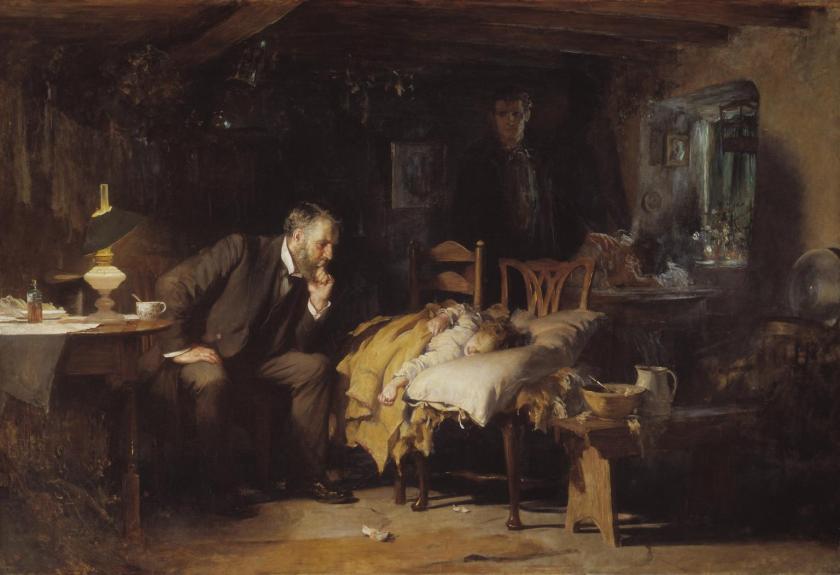
The Doctor exhibited 1891 Sir Luke Fildes 1843-1927 Presented by Sir Henry Tate 1894 

hippocrates2