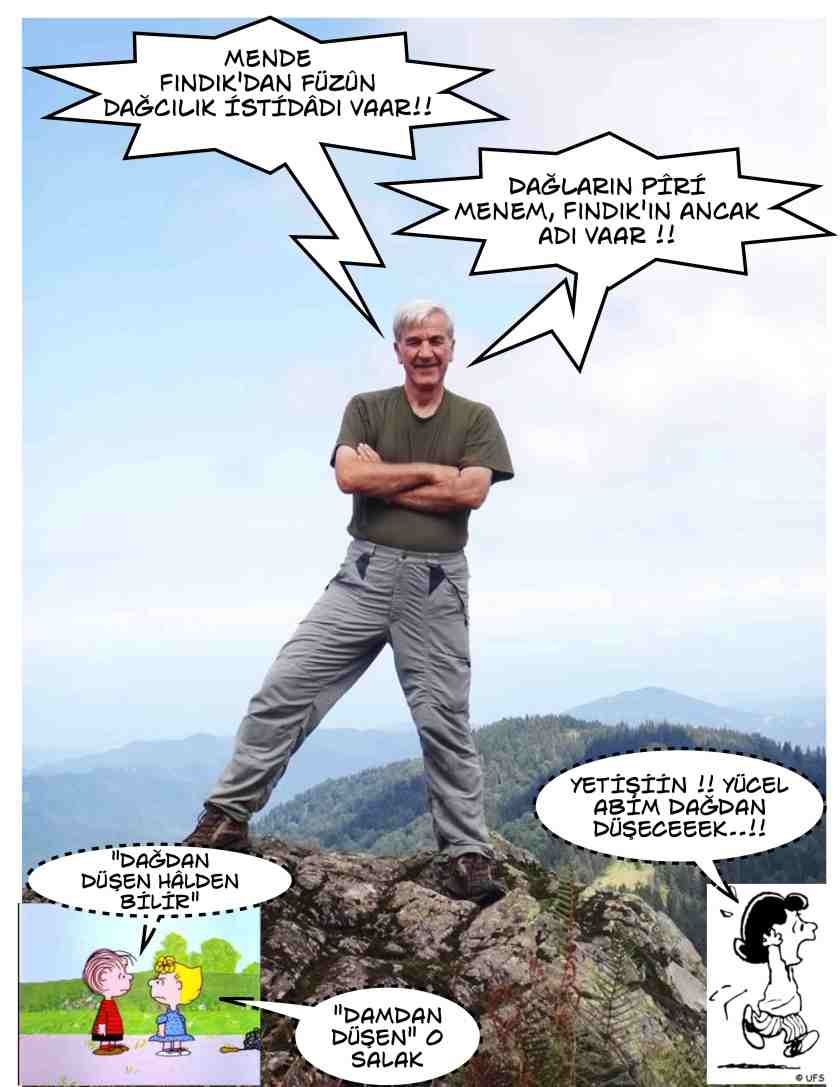
DAĞCI YÜCEL
“TEKSAS” MI DEDİNİZ?

Akşam yemeği sonrası elimde keyif çayım, ayağımı uzatmış televizyonda seyredecek bir şeyler arıyorum. Hangi kanalı açsam ismi “kara” ile başlayan bir dizi (ya da onlardan bir tanesinin fragmanı) çıkıyor karşıma. “Çıt!” Karagül. “Pıt!” Kara Sevda, “Tık!” Kara Ekmek. “Çat!” Kara Bela! Kara’lardan kurtulmaktan tam ümidimi kesmişken “kara”sız bir şeye rastlıyorum ekranda ama onun da adı “Acı Aşk”! “Eh, ülkenin içinde bulunduğu bu durumda diziler pembe, aşklar da tatlı olacak değil ya” diyorum içimden ve yüz bilmem kaçıncı defa seyrettiğim Kemal Sunal filmlerinden her hangi birisine rastlamak ümidi ile geziniyorum kanallarda; bir nebze olsun gülümseyebilmek adına.

Hadi “kara” isimli olmalarına katlandık diyelim de, her nedense bu dizilerdeki bütün olaylar tek bir aile içerisinde ve genellikle aynı mekanda geçiyor. Kimsenin bir gün çalıştığını görmesek de, tüm ailenin ortak olduğu (ama ne iş yaptığı bilinmeyen) bir şirketleri oluyor mutlaka. Havuzlu villalar, özel şöförlü lüks otomobiller ve de mini etekli, önünde küçücük beyaz önlük takılı, başında beyaz keple gezinen hizmetçi kızlar… İyi has da, bu kadar lüks ve refah içerisindeki insancıklar nedense hiç alçak sesle konuşamıyorlar ve de hiç gülmüyorlar! Devamlı bağırtı-çağırtı, sürekli gözyaşı… Ama bu tür dizilerin iyi bir tarafı da yok değil hani. O da, birkaç hafta seyretmeseniz bile, pek bir şey kaçırmıyor olmanız. Zira iki kişinin aynı kelimeler ve cümlelerden oluşan kısa bir konuşması bile en az birkaç ay sürüyor.
 Bu arada anlayamadığım bir şey daha var; herkes silahlı! Herkes her fırsatta birbirinin kafasına bir tabanca dayıyor. Küçücük bir münakaşa mı oldu? Hop! Eller bele gidiyor ve daha önce var olduğu hiç belli olmayan kocaman tabancalar çıkıyor ortaya. Sanırsınız ki herkes Zati Sungur! Tabi, tabi, kadınlar da dahil buna.

Rastgele tıklayıp o an seyretmekte olduğum bir dizide millet yine silahlara sarılınca, “biraz geç oldu ama bunları seyretmektense kahveye gidip arkadaşlarla biraz geyik muhabbeti yapsam daha iyi olurdu” diye düşünüyorum ve biraz sonra kendimi kahveden içeriye girerken buluyorum. Selam faslından sonra bana da masada yer açıyorlar, bir çay ısmarlıyorlar, oturuyorum. Dördüncü tur “Eee, daha daha nasılsın?” faslı da bittikten sonra, Cambaz Hüsnü benim gelmemle kesilmiş olan konuşmasına kaldığı yerden devam ediyor:
“Hee, ne diyodum? Bizim avrat, diyodum. Müsrifin teki birader. Lan bir haftada dört carcur (şarjör) mermi harcanır mı lan? Yok karşıkı Huriye cadısı bizim balkona en az yüz kurşun sıkmışmış da, yok karşılık vermezse olmazmış da, falan filan. Allah canımı alsın gösterişten başka bi şey deel! Bizim balkona baktım, sen de on, ben deyim onbeş kurşun deliği var hepsi hepsi. Sen kalk elli altı tane saydır karşı balkona! Bu fişekleri yoldan beleş mi topluyok lan?”

Tam o sırada kahveye işportacı Fırıldak Nejat girmez mi? Tezgahına sıraladığı boy boy mermi kutularını göstere göstere, sırıtkan bir ifadeyle konuşmaya başladı;
“Selam abiler, dayılar ve de amcalar! Çekirdek isteyen varsa verelim. Taze geldi”.
“Yedi atmışbeşin kutusu kaça lan Neco?” dedi kambur Selim, “Benim avrat ısmarladıydı da.”
“Senin için özel birşeyler yaparız emmim be, kaç kutu lazım?”

Nejat’ı görünce yüzü ekşimtırak olan Kel Eşref dayanamadı “Almayın ha bu adi heriften, hepten sahte lan bunun sattıkları. Fişeklerin barutundan çalmışlar; çekirdek namluda tıkanıp kalıyor. Çin malı mıdır nedir?”
“Ayıp ettin be Eşref dayı. Gel bak, hepsi resmen ithal malı. Sen benim mermilere kusur bulana kadar, Nuh Nebi’den kalma çakaralmazında hata ara.”
Çayım bitmişti ve bu mermi muhabettiden de sıkılmıştım artık. Kalktım eve yollandım.
Kapıyı açan karım manalı manalı baktı. Dayanamadım, “Ne var hatun ne bakıyorsun yüzüme öyle?” diye sordum. “Yine elin boş geldin de…” dedi ve arkasını dönüp mutfağa doğru yürüdü. “Dur hele yahu, ne getirecektim ki eve?” diye seslendim arkasından. Durdu, döndü, iki elini beline dayadı ve;
“Kaç kere söyleyecem? Evde ilaç için bir tane bile mermi kalmadı, hani beş-on kutu getirecektin?”
“Yahu unutmadım, hatta bu akşam Nejat’tan alacaktım, arkadaşlar ‘sahtedir’ dediler, vazgeçtim. Yarın gider adı sanı belli bir dükkandan alırım.”
Yemek masasının üzerine abanıp ders çalışma pozisyonuna girmiş oğlum atıldı;

“Baba yaa… Bugün örtmen benim tabancamı gördü, ‘babana söyle sana doğru dürüst bir şey alsın’ dedi. Artık altı-otuzbeşi kadınlar bile küçük diye kullanmıyorlarmış. Hatta yedi-altmışbeş bile birkaç yıl sonra tarih olacak diyorlar.
“Biraz daha bekle oğlum, sendeki sıfırı (6.35 cal.) kız kardeşine veririz, sana da en kıralından bir dokuz milimetrelik CZ alırız”.
“Yaa baba yaaa, almışken bir simit ya da gılok alsan ya, Çek malını ne yapayım?
“Simit de nereden çıktı lan, ne alaka şimdi?”
“Sen de nerelerde kalmışsın baba ya? Smith Wesson yani… Ya da Glock, ya da daha güzel bi şey, ne biliiim işte… Hem kendine de son model bi tane alsan iyi olur artık ha.”
Hatun lafa karıştı;
“Baba oğul alın bakalım yeni yeni şeyleri, ama hep de kendinize alın! Şurada sizin için saçını süpürge etmiş kadına bir günden bir güne ‘artık fabrikası bile kapanmış, ikinci elden alınma 7.65 Llama’yı çöpe at, bak sana ne hediye aldık’ deyip güzel bir tabanca mı getirdiniz?”
“Haklısın da hanım, az daha idare et, valla aklımda, alacam sana güzel bir şey, söz.”
“İdare et, idare et…de ne zamana kadar? Dün gece halamın kızının kınasında iki şarjör boşalttım, kimsenin umuru bile olmadı. Ben sıktım ben dinledim. Elin kadınları 14’lüyü öttürdü müydü tüm karşı mahalle dinliyor valla! Hem bana bak, o kızın düğünü de yarın ha. En az dört kutu mermi bana sıkmalık, dört kutu da geline takılık olarak lazım, bunu da unuttum demeyesin sakın, seni eve almam valla!”
“Yahu hanım, hani yarım ya da çeyrek altın takacaktın. Bu mermi ayağı de neyin nesi?”
“Ohooo.. senin dünyadan haberin yok be. Takı olarak altın demode oldu çoktan. Şimdi gelinin bir yakını torba tutuyor, sen de mermileri atıyorsun içine. Altını kim ne yapsın ki artık? Hem altın gibi onun da sınıfları var. Mesela bir kutu dokuz milimetrelik mermi bir tüm altın gibi sayılıyor. Yedi-altmışbeş, yarım altın, altı-otuzbeş çeyrek altın gibi rağbet görüyor.”
Bu duyduklarım beni çıldırtmaya yetmişti. “Tamam lan tamam, ne istiyorsanız alacam, ceketimi bile satıp evdeki tüm tabancaları yenileceyeceğim, hatta hafta sonları zevki için bir de taramalı alacam, oldu mu?!” diye bağırdım.
“Baba, üşüyeceksin, kalk yatağına git istersen” diyen kızımın sesi ile kendime geldim. Meğer
televizyonun karşısında sızmış kalmışım!”
“Baba, bu arada, demin ‘alacam, alacam’ diye sayıklıyordun. Rüya mı görüyordun? Neydi o alacağın?”
“Boşver kızım, rüya işte…boşveeerr…” dedim.
Dedim demesin de rüyayı anımsayıca aniden ürperdim, zira “Abdala malum olurmuş” derler.
Gelecekte, filmlerde gördüğümüz vahşi batı Teksas’ındaki gibi bir yaşam mı bekliyor bizi yoksa?
Neyse, neyse… müsterih olun; ben “aptal” olabilirim ama “abdal” olabileceğimi hiç sanmıyorum. Yok canım malum falan olmamıştır, yok, hayır, hayır, olmamıştır, olmamıştır!
Bu nedenle rahat olun!
Olabilirseniz, tabi.

Adil Karcı
27 Aralık 2015

Dünyanın ilk zenci pilotu kabul edilen Ahmet Ali Çelikten hakkında biraz bilgi sunmaya çalışacağım. (1883-1969) Diğer isimleri Arap Ahmet Ali veya İzmirli Ahmet Ali. Çelikten’in büyükannesinin 19. yüzyılda Afrika Bornu emirliğinden (bugünkü Nijerya) Osmanlı imparatorluğuna köle olarak getirildiği tahmin edilmekte. Çad gölünün güneyindeki Bornu, köle tüccarlarının en çok uğradığı yerlerden biriydi. Yeterince köle toplandıktan sonra köle kervanları Sahra çölünü aşar, Libya üzerinden Trablus, Mısrata, Surt ve Bingazi limanlarına ulaşırdı. Esirler gemilere doldurulur ve dönemin en büyük köle alım satım merkezlerinden biri olan istanbul’a getirilirdi.

İstanbul’daki köle pazarı Kapalıçarşı’nın Nuruosmaniye kapısına yakın bir yerde Tavuk Pazarı ismi ile kurulmuştu. Burda sadece Cuma günleri satış yapılmazdı. Sınırdan giren köleler için %10 oranında resmî vergi ve çeşitli harçlar alınıyordu. Kölelerin hangi işlerde kullanılacağı bile belliydi. Küçük yaştaki beyaz çocuklar genelde yeniçeri ocağına yollanırdı. Zenci erkek ve kadınlar ise tarım işçiliği, ev işleri, halayık (kadın köle) olarak ayrılıyorlardı. Eş alma amacı ile Avrupalı kadınlar tercih edilirdi. Açık tenli beyaz kadınlar esmer kadınların iki misli fiyata satılabiliyordu. Bazen çeşitli konakların hanımları, esir kız çocuklarını satın alırlar, daha sonra bunları erişkinliklerinde yüksek fiyatlara satarlardı. Güzel beyaz kadınlar dönemin zenginleri, devlet erkanından kişiler, beyler ve paşalar tarafından alınırdı. İçlerinde güzelliği ve zekası ile dikkat çekenler bazen özel olarak ayrılır ve Harem’e gönderilirdi. Eğer padişahın ilgisini çekip aile içine girmeyi başarabilirlerse, ortak haremden çıkarılır, padişahın annesi, çocukları, hizmetçiler ve hadım edilmiş ağaların kaldığı Harem-i Hümayun’a alınırlardı.
Ahmet Ali’nin büyükannesini kimin satın aldığı bilinmiyor. Ailesi onun “İstanbul mektupçusu” olduğunu belirtmiş. Böyle bir ünvan olmadığına göre, onu alan kişi ihtisap ağasının katibi olabilir. İhtisap ağası, kentin belediye hizmetlerini yürütmekle sorumlu olan kişiydi. Katip sürekli olarak yazışma ve mektup işlerine baktığından onu kısaca “mektupçu” şeklinde anmış olabilirler.

Osmanlı, zaman içinde kölelik uygulamasına sınırlar getirdi. 1847 yılında kölelik resmen kaldırıldı ve köle pazarı Sultan Abdülmecid tarafından yıktırıldı. Bu konuda Osmanlı diğer milletlerle aşağı yukarı aynı politikayı gütmüştür. Avrupa’da İngiltere’den sonra Osmanlı köleliği kaldırmış, bunu Fransa gibi devletler takip etmiştir. Ahmet Ali’nin, ismi bilinmeyen büyükannesi muhtemelen bu pazarda satılan son kölelerden biriydi.
İmparatorluktaki zenciler azat edildikten sonra ağırlıklı olarak İzmir civarına yerleştiler. Padişah, azat edilen kölelere evlenmeleri ve birlikte yaşamaları için bu civarda çiftlikler tahsis etmişti. Buraya yerleşenler arasında
Ahmet Ali Çelikten’in anne babası Zenciye Emine Hanım ve Ali bey de bulunmaktaydı. Ahmet Ali, bu ailenin en büyük çocuğu olarak doğdu. Doğuştan zeki ve yetenekli bir çocuktu. 1904’te Haddehane mektebine girdi. (Demir çelik işleme endüstrisi) 4 yıl sonra mülazım-ı evvel (üsteğmen) rütbesi aldı. Asıl amacı denizci olmaktı, ama tam o yıllarda Wright kardeşler ilk başarılı uçuş denemelerini yapmışlar ve havacılık yeni bir alan olarak gençleri cezbetmeye başlamıştı. 1909’da ABD, 1911 Trablusgarb savaşında İtalyanlar uçakları kullanmaya başladılar. 1910’da ise Harbiye Nazırlığı (eski genelkurmay başkanlığı), Fen Kıtaları ve Müstahkem Mevkiler Umumi Müfettişliğine bir yazı göndererek havacılık dairesi kurulmasını emretti. Harbiye Nazırı Mahmut Şevket Paşa’nın gayretleri ile ilk tayyareler satın alındı ve bir kaç genç eğitim görmeleri için ingiltere ve Fransa’ya gönderildi. Bunların arasında çarkçılık yapan deniz askerleri de vardı ve makinelere yatkın oldukları için donanmacı kadrosundan yavaş yavaş havacılık kadrosuna geçiyorlardı. Ahmet Ali de tayyare eğitimi almıştı. 1916 yılında bir hava müfettişi baş komutanlığa bir yazı göndererek şunları belirtti: “Bahrî tayyareci çarkçı mülazım-ı evvel Ahmet Ali Efendi, tayyarecilik konusundaki sınavlarını başarıyla tamamlamış olup, künyesinin tayyareci olarak düzeltilmesini arz ederim.” Fakat Ahmet Ali’nin resmî görev alabilmesi için bir deniz tayyaresi ile uçuş yapması gerekiyordu. 1917 yılında yüzbaşı oldu. Aynı yıl Berlin’e gönderildi ve eğitim uçuşlarını tamamladı. 1918’de yurda döndü, İzmir Bahrî Tayyare Bölüğü’ne atandı.

Bu sırada I Dünya savaşı bitiyordu ama Anadolu’nun işgali başlayacaktı. Yunan savaş gemileri Akdeniz ve Karadeniz’de karakollar kurmuşlar, geçen gemileri denetliyorlar ve bazılarına el koyuyorlardı. Bu yüzden, Anadolu’daki direnişçiler Haliç’teki uçakları Anadolu’ya kaçırma planları yapmaya başladılar. Anadolu’daki direnişe destek vermek için Konya’daki tayyare istasyonunda çalışmalar sürüyordu. Ahmet Ali gönüllü olarak Konya’daki bu istasyona katıldı. Bu durum Saray’ın hoşuna gitmemişti. Direniş hareketini desteklediği için maaşı kesildi ve hakkında takibat başlatıldı. Fakat artık Ahmet Ali bey kurtuluş savaşının içindeydi. Düşmandan kaçırılan 3 uçak Amasra Deniz Tayyare İstasyonuna gönderilmişti. Acilen pilotlara ihtiyaç vardı. 1922’de Ahmet Ali bey diğer pilotlarla birlikte Amasra’ya gönderildi. Görevleri İstanbul Boğazı çıkışından itibaren Batı Karadeniz’deki düşman gemilerini takip etmek, raporlamak ve deniz harekatına destek vermekti. Daha önce İzmir’de görevli iken Alman pilot arkadaşları ile birlikte Yunan uçaklarıyla çatışmaya girmişler bir Yunan uçağını körfeze düşürmüşlerdi. Ahmet Ali bey savaşta pek çok yararlı işler yaptı. Savaş sonrasında ise bütün havacılık faaliyetlerini tek yerde toplama kararı alınınca İzmir Güzelyalı’da bir tayyare bölüğü kuruldu. Bu bölüğe 1924’te Ahmet Ali bey atandı ve görevini İzmir’de sürdürmeye devam etti. 1928’de Hava Müsteşarlığına atandı. Kendisine bahri tayyare madalyası verildi. Erkek kardeşi ise Çanakkale Savaşında şehit düşmüştür. Ahmet Ali’nin ailesi pilotluğu bir aile mesleği olarak sürdürdüler. Oğulları, kız kardeşinin eşi ve yeğeni de pilot oldu. Bazıları uçuş öğretmenliği yaptılar.

Kaynak: havacilar.com. Bu konuda yabancı yazılara da ulaşmak isterseniz “first black pilot in aviation history” yazıp arayın. Bazılarına göre ise, ilk Afrika kökenli pilot Eugene James Bullard olup, ismi Ahmet Ali Çelikten ile birlikte anılmaktadır. Hangisi olursa olsun, neticede Ahmet Ali beyin bu alandaki öncülerden biri olduğu kesindir.

Wikipedia İngilizce bölümü ise ilk zenci pilot olarak Ahmet Ali Çelikten’in ismin vermiş. Özet bilgi şu şekilde: “First black military pilot: Ahmet Ali Çelikten a.k.a. Arap Ahmet Ali was the first black military pilot in the history, served in Ottoman Aviation Squadrons from 1914 or 1915. His grandmother came from Bornu (now in Nigeria) to the Ottoman Empire as a slave.”
Kendisini rahmet ve saygı ile anıyorum.
 Mâlûm Uçak
Öyle bir yolculuk ki, , “Yok artık ! ” kat sayısı arş-ı âlâda,”Töbe estağfurullahı” gayetle bol. Yol boyunca milletin âsabı öylesi gergin ki, dokunsan herkesten ipince bir yüksek “Do” sesi çıkmakta.
19 Aralık (Kânûn-u evvel), 2015’de İstanbul’da bindik Toronto uçağına. Yerimize oturmamızla, yolculardan biri derhal hastalandı ve kendini dışardan gelen bir “Türk doktoruna emanet edip” uçaktan ayrıldı. Giden yolcunun ardından “Güvenlik” nedeniyle tüm el çantaları indirilip denetlendi. Haliyle 90 dakika gecikmeyle havalandık.
Bir saat sonra ses yükseltici “Uçakta doktor var mı ?” diye ünneyince Nilüfer, “son kez ben yaptım şimdi de sen yap” diye mızıklanıp topu fakire ortaladı. Bu fakir ise, kerizlik bu ya ve dahi can sıkıntısından, Hz. Hacivat’ın “Yâr bana bir eğlence medet” vecizesi kavlince sırıtaraktan parmağımızı kaldırdık. Gelen “gökkonuksal avrata” doktorluk ehliyetimizi gösterip, “Lâkin biz çocuk pediatristiyiz..” dememizle, kızcağız pek sevinmiş, “olsun.. ne de olsa az çok doktor sayılırsınız” deyip, engellemesem muhabbetinden herkesin içinde neredeyse boynumuza sarılıverecek idi. Müdahalemizi istedikleri ağır ve âcil vak’a, baş ağrısından muzdarip orta yaşlı bir hanım idi. Hikâyesini bir güzel alıp, çocukluk aşılarının bir tamam yapıldığını, küçükken kızamık geçirdiğini, allerjisi olmadığını falan öğrenip, Acetaminofen hapı ile kadıncağızın ızdırabını mâhirce dindirip, hayatını kurtardık. Bir saat sonra aynı müdahaleyi, orta yaşlı bir İranlı’ya yaptık ve, ücret olarak hastanın karısı tarafından iki adet kurâbiye ile ödüllendirildik.

(Keflavik hava alanı)
Okyanus üzerine geldiğimizde, içimiz geçmiş, hafifçe uykuya dalmıştık ki, bu sefer başka bir gökkonuksal kızcağız omuzumuza dokunup fakiri uyandırdı. Gözleri endişeden falcı taşı misâli açılmış olaraktan “oh doktorcuğum medet..sen medeti bilir misin..?“ diyerekten yardımımızı istedi. Meğerse, kabin görevlisi kızlardan birinin eli, af buyurun helânin çöp tenekesinin kapağına sıkışmış, katiyyen çıkmıyormuş. Bir yandan bu durumun doktorlukla ilgisini düşündükse de, hâliyle epeyce de meraklandığımızdan üstelik vicdan da yapıp helâya gitmemizle bir de ne görelim.. zavallı kızcağızın eli öylesine sıkışmış ki, töbeler olsun, ne ileri ne geri asla oynamamakta, kızcağız ise en ufak harekette ağlıyaraktan, hatta çığlık bile ataraktan müthiş bir ızdırap içinde idi. Allahtan elinde lâstik bir eldiven takılıydı da “basıncın bir kısmını almıştır” diyerekten efkâr yürütmüş idik. Eldivenin içine salata zeytinyağını döktük olmadı, kapağı ittik çektik, olmadı. Kriko neyim bir yana, uçakta tornavida bile olmadığını hayretle öğrendik. Bu arada kızcağızın arkadaşları etrafımızda dönenmekte, bazılarının didelerinden yaşlar dökülmekte, üzüntü ve telaş yapmakta idiler. Kaptan pilot dahi yanımıza gelip, “Yok arkadaş, bu el buradan çıkmayacak, tiz yakın bir hava alanı bulup insek gerek” deyip yuvasına çekildi.
 İzlanda
Kabin ekranından uçağın konumu herkese âyan olduğundan, uçağın 90 derece kuzeye döndüğünü ve İzlanda’yı hedef yaptığını gördük ki uçakta ısırılmadık parmak kalmamacasına. Bu arada Cenap nâm kadîm arkadaşım meğerse telli fonundan “Flightradar24” programıyla taa Toronto’dan bizim uçuşu izlermiş. Bizim uçak, Kuzey’e dönmesiyle anîden ekrandan kaybolmuş. Bunu gören Cenap’ımızda âniden şafak atıp korkudan böbreği ağzına gelivermiş. Altı saat gecikmeyle de olsa, önceden kesiştiğimiz gibi Toronto’da Cenap’in evine vardığımızda, “Tir git lan ordan..” dedi..”Türkiye’den ısmarladığım ilâçlı kremlere bir şey olur diye korktum..” diyerekten de korkusunun nedenini açıklamış idi.
Bir saatten az bir süre sonra da İzlandanın güney batısındaki, 8500 nüfuslu Keflavik kasabasına rahatça indik.
Kaptan pilotumuz İzlanda’lı ilgililere, telsiz fonla, “Böyleyken böyle” deyip durumları önceden bildirmiş olduğundan, itfaiyeci kılıklı birkaç İzlanda yiğidi tornavidalarını kapıp gelmişler. İki dakikada “şıp” diye kurtardılar hostes kızımızı ve de hepimizin hayır duasını aldılar.
Kızımızı “hop” diye bir tekerlekli sandalyeye koyup Keflavik hastanesine götürdüler. Bu arada açıkgöz bir yolcu da, “Ay bana da bişiler oluyor” ayaklarına yatıp, o da hastaneye götürüldü. Bir saat sonra ikisi de döndüler ve altı saat gecikmeyle yeniden göklere revân olduk.
Emeklerimiz Türk Hava Yollarına helâl olsun; Nobel bekliyorsam nâmerdim.
Prof. Dr. Timur Sumer

CENAP’LA TORONTO’DA
Kardeşim Birnur’un yorumu :
Abiciğim, yolculukta başınıza pişmiş tavuğun başına gelmeyenlerin geldiğini Nilüfer abladan duydum. Çok geçmiş olsun. Oysa ki, selâmetle gitmeniz için gereken bütün duaları okumuştuk, pek etkili olmamış. Şimdi evinizde dinlenirsiniz. Hostesin elinin çöp kutusuna sıkışması hadisesini bir türlü gözümde canlandıramadım. Keşke bir resmini çekip yollasaydın da ibretimizi alsaydık. Böyle tövbe estağfurullah olayları fotoğraflayıp ölümsüzleştirmek lazım. Yine de kıssadan hissemizi kaptık: Her ölümlü bir gün elini çöp kutusuna kıstırmayı tadacaktır (ki mutlaka benim başıma da gelecektir). Bu işin çaresinin İzlanda’da olduğunu öğrendiğim iyi oldu. Başıma gelirse çöp kutumla birlikte oraya bir yolculuk yapacağım demek ki. Hayırlısı olsun. Herkese selamlar sevgiler. Birnur

Vakti zamanında İstanbul’da Sarayburnu ile Büyükada arasında 2 kişilik kayığıyla bir nevî taksicilik yapan Ali isminde yiğit mi yiğit, yakışıklı mı yakışıklı , çapkınlığıyla da dillere destan bir kayıkçı varmış.
Müşterileri çoğunlukla son vapura yetişmesi asla mümkün olmayan, Büyükada’da ikamet eden Kumkapı meyhanelerinin gayr-i müslim konsomatrisleriymiş.
Konsomatris dediysek, sakın ola umumi kadın ile karıştırılmaya. . Dönemin konsomatrisleri, efkâr dağıtılan meyhane ve pavyon sofraları müdavimlerini daha ilk kadehi yudumlamadan sarhoş edecek kadar güzel ve bir o derece de namuslularmış. Müşteriyle ilişkileri sadece ve sadece müessesenin onları kolayca şovüşleyebileceği kıvama kadar sarhoş etmekmiş.
Lâkin bu kadınların ortak yanları varmış ki, o da bizim Kayıkçı Ali’ymiş.
Ali’nin kayığına binip de, Büyükada’ya varmadan, Heybelinin hemen arkasında mehtap altında, dalga üstünde Ali’nin tezgâhından geçmeyen yokmuş. Ali de Ali’ymiş hani…
Öylesine bir çekiciliği varmış ki, kayığına müşteri olup da kürek çeken kaslı kollarını, ay ışığında parlayan kavruk tenini gören daha Kınalı’ya bile varmadan Ali’nin karşısında bir mum gibi eriyormuş.
Eee, Kayıkçı Ali de müşteri velinimettir anlayışıyla hiç birine hayır demiyor sessizce işini görüyor, ve lakin kayıkta olanı biteni asla ve asla hiç bir mecliste konu etmiyormuş.
Günlerden bir gün, Çukurova’nın güzelliği ve dirâyeti dillere destan, uğrunda bıçaklar çekilen kurşunlar atılan, mekânlar basılan Âfet-i Devrân Neriman’ı Kumkapı’nın en ünlü meyhanelerinden birine transfer olmuş. Bu Neriman Venüs kadar güzel, lâkin Rahibe Teresa kadar da frijitmiş. Rivâyet olunurmuş ki Neriman’ı tezgâhından geçirecek er kişi henüz âhir zamana intikâl etmemiş, o mübarek ana, o yavuz yiğidi daha doğurmamıştır. .
Her nasılsa temmuz gecelerinden bir mehtaplı gecede , Âfet-i Devrân Neriman’ın Büyükada’ya gitmesi icâb etmiş. Çevresindekiler acele etmemesini, sabahın ilk vapurunu beklemesini önermişler. Dinlemeyip ısrar edince de Ali’nin namını anlatmışlar. Şuh bir kahkaha savurmuş Neriman, – “Hahahayyyyt, demiş, O kayıkçı parçası mı namusuma el sürecek?”
Aman yapma etme büyük konuşma, Ali’nin kayığına binip de donuna dokunmadan inen yok demişler.. Dinletememişler.
Nihayet binmiş Neriman Ali’nin kayığına.. “çek” demiş Büyükada’ya.. Hayhay demiş Ali.. “Vira bismillah” çekip asılmış küreklere.
Moda burnu hizasına geldiklerinde, Neriman dayanamayıp göz ucuyla kaçamak bakışlar atmaya başlamış Ali’ye… Bir yandan Ali’nin nâmının hiç de haksız olmadığını düşünürken bir yandan da içinde kıpraşan karşı koyamadığı arzuya gem vurmaya çalışıyormuş..
Bir kaç kez göz göze gelmişler… Ali hiç ses etmemiş. Derken Neriman’ın kaçamak bakışları sıklaşmış.. Zaptetmeye çalıştığı arzuları coştukça coşuyormuş..
Öte yandan da uğruna erkeksiz yaşadığı belki de eline erkek eli değmeden mundar olup öte aleme hicretine sebep olacak nami geliyormuş aklına… O içinde böyle fırtınalar yaşarken, Ali sessizliği bozuvermiş, bir yandan küreklere asılırken bir yandan da nasihat verir gibi, of çeker gibi mırıldanmaya başlamış;
– “Derleeeeeer, derleeeeeer, derleeeeeer, derleeeeeer. ..”
Ses etmemiş Neriman.. Ali devam etmiş ,
– “Derleeeer, derleeer, derleeer, derleer…”
Neriman zaten hormonlarıyla amansız bir cenk halında, Ali’nin umursamazlığı ve “derleeer
derleeer” şeklindeki “hû” çekmesi iyice sinirlerini bozmuş ve çıkışmış:
– “Ne derler be!? Ne derleeeer?”
Ali sakın, türkü kıvamında, sanki kendi kendine sesli düşünüyormuş gibi devam etmiş..
– “Derleeer derleeeer. Ali’nin kayığına bindin bir kere Neriman… vermesen de verdi derleeer…”

By Emily Chung, CBC News Posted: Dec 11, 2015 3:35 PM ET Last Updated: Dec 11, 2015 4:08 PM ET
 The new study shows that the Earth’s rotation is slowing down as a result of melting glaciers and rising sea levels. (NASA)
With human-caused climate change, we puny creatures are having some powerful effects on our entire planet, including one you might not imagine was possible — making it spin more slowly.
The melting of glaciers near the Earth’s poles and the resulting rise in sea level is slowing down the Earth’s rotation and making each day a little longer, a new study confirms.
Scientists had predicted it would happen, but to their puzzlement, they couldn’t measure much of an effect.
Glaciers contain a huge amount of mass near the poles, close to the Earth’s axis of rotation, which runs from pole to pole. When glaciers melt, the meltwater ends up in the oceans, which have most of their volume near the equator, farther away from the Earth’s axis.
 Scientists measure changes in the speed of the Earth’s rotation over thousands of years by looking at records of ancient eclipses recorded by civilizations such as the Babylonians, says Mathieu Dumberry, a physics professor at the University of Alberta. (John Ulan)
Just as a spinning figure skater slows down as she extends her arms out from her chest, moving mass away from the Earth’s axis of rotation should slow the Earth down, says Mathieu Dumberry, a physics professor at the University of Alberta who co-authored the paper published today in the journal Science Advances.
Scientists measure changes in the speed of the Earth’s rotation over thousands of years by looking at records of ancient eclipses recorded by civilizations such as the Babylonians, Dumberry said.
Because astronomers know the Earth’s orbit very precisely, they can predict exactly what date and time eclipses should have been visible if the Earth were always rotating at the same rate as it is today. But if the Earth were rotating at a slightly different speed, the part of the Earth facing the moon at a given point during the eclipse would be different.
 Just as a spinning figure skater slows down as she extends her arms away from her chest, moving mass away from the Earth’s axis of rotation should slow the Earth down. (Lucy Nicholson/Reuters)
The eclipse records showed the Earth just wasn’t slowing down as much as scientists expected as the glaciers melted, based on our most recent understanding of different factors that affect the Earth’s rotation. Those include:
The numbers just didn’t add up, and scientists couldn’t explain why.
The new study, led by Jerry Mitrovica, a professor of geophysics at Harvard University, found there was a piece missing. We only directly observe the rotation of the Earth’s surface, but the Earth’s liquid core doesn’t rotate at the same rate.
“It’s like a hamster in a wheel,” Dumberry said. “The hamster runs in one direction and the wheel [turns] in the other.”
 Glaciers such as Argentina’s Perito Moreno contain a huge amount of mass near the poles, close to the Earth’s axis of rotation. When glaciers melt, the meltwater ends up in the oceans, which have most of their volume near the equator, farther away from the Earth’s axis. (Mario Tama/Getty)
Changes in the rotation of the Earth’s core can be detected by changes in the Earth’s magnetic field.
“Earth’s core has accelerated,” Dumberry said. “It has been moving slightly faster in the past 3,000 years.”
The researchers added that missing piece of information to their calculations, along with the latest tide gauge and satellite data about the amount of sea-level rise and post-glacial rebound. They found glacier melt due to climate change since the industrial revolution has caused the Earth to slow down exactly as they had predicted.
How much? Don’t expect too much extra time on your hands — researchers predict that a century from now, Earth’s slower rotation will make each day 1.7 milliseconds longer.

The moment to be wariest of political enthusiasms is precisely when elite opinion is all lined up on one side. So it is with the weekend agreement out of Paris on climate policy, which President Obama declared with his familiar modesty “can be a turning point for the world” and is “the best chance we have to save the one planet that we’ve got.”
Forgive us for looking through the legacy smoke, but if climate change really does imperil the Earth, and we doubt it does, nothing coming out of a gaggle of governments and the United Nations will save it. What will help is human invention and the entrepreneurial spirit. To the extent the Paris accord increases political control over human and natural resources, it will make the world poorer and technological progress less likely.
***
The climate confab’s self-described political success is rooted in a CONCEIT and a BRIBE. The conceit is that the terms of the agreement will have some tangible impact on global temperatures. The big breakthrough is supposed to be that for the first time developing and developed countries have committed to reducing carbon emissions. But the commitments by these nations are voluntary with no enforcement mechanism.
China (the No. 1 CO2 emitter) and India (No. 3 after the U.S.) have made commitments that they may or may not honor, depending on whether they can meet them without interfering with economic growth. If the choice is lifting millions out of poverty or reducing CO2, poverty reduction will prevail—as it should.
Germany’s high energy costs in particular have been driving companies offshore thanks to its renewable energy costs and mandates.
But no one is happier than President Obama, who would have to submit a binding treaty to the Senate for ratification.
Mr. Obama’s U.S. CO2-reduction targets are fanciful in any case, short of a major technological breakthrough. The President promises that the U.S. will reduce carbon emissions by 26% to 28% from 2005 levels by 2025, but the specific means he has proposed to get there would only yield about half that. And that’s assuming none of Mr. Obama’s unilateral regulatory policies are declared illegal by U.S. courts.
As for the BRIBE, rich countries in Paris bought the cooperation of the developing world by promising to send $100 billion a year in climate aid. So the governments of the West are now going to dun their taxpayers to transfer money to the clean and green governments run by the likes of Zimbabwe’s Robert Mugabe. We can’t wait to see New York’s Chuck Schumer make the case on the Senate floor for American aid to China so it can become more energy efficient and economically competitive.
The world’s poor can best cope with climate harm if they are richer, which requires faster economic growth. Yet everything we know about economic development is that foreign aid retards growth when it expands the reach of Third World governments. Poor countries won’t be helped by subsidies for solar cells delivered through the World Bank.
Which brings us to the development on the fringes of Paris that might do some good. Bill Gates is hitting up his fellow billionaires to pay for research into energy alternatives to fossil fuels. This is a tacit admission that the technology doesn’t exist to make alternatives cost-effective no matter how many subsidies governments offer. If carbon energy’s efficiency and wealth creation are going to be displaced, the world will need advances in battery storage and nuclear energy, among other things.
The grandiose claims of triumph in Paris represent the self-interest of a political elite that wants more control over the private economy in the U.S. and around the world. These are the last people who will save the planet.
WEJ Dec. 13, 2015
 ENLARGE
Little children have imaginary friends. Modern liberalism has imaginary enemies.
Hunger in America is an imaginary enemy. Liberal advocacy groups routinely claim that one in seven Americans is hungry—in a country where the poorest counties have the highest rates of obesity. The statistic is a preposterous extrapolation from a dubious Agriculture Department measure of “food insecurity.” But the line gives those advocacy groups a reason to exist while feeding the liberal narrative of America as a savage society of haves and have nots.
The campus-rape epidemic—in which one in five female college students is said to be the victim of sexual assault—is an imaginary enemy. Never mind the debunked rape scandals at Duke and the University of Virginia, or the soon-to-be-debunked case at the heart of “The Hunting Ground,” a documentary about an alleged sexual assault at Harvard Law School. The real question is: If modern campuses were really zones of mass predation—Congo on the quad—why would intelligent young women even think of attending a coeducational school? They do because there is no epidemic. But the campus-rape narrative sustains liberal fictions of a never-ending war on women.
Institutionalized racism is an imaginary enemy. Somehow we’re supposed to believe that the same college administrators who have made a religion of diversity are really the second coming of Strom Thurmond. Somehow we’re supposed to believe that twice electing a black president is evidence of our racial incorrigibility. We’re supposed to believe this anyway because the future of liberal racialism—from affirmative action to diversity quotas to slavery reparations—requires periodic sightings of the ghosts of a racist past.
I mention these examples by way of preface to the climate-change summit that began this week in Paris. But first notice a pattern.
Dramatic crises—for which evidence tends to be anecdotal, subjective, invisible, tendentious and sometimes fabricated—are trumpeted on the basis of incompetently designed studies, poorly understood statistics, or semantic legerdemain. Food insecurity is not remotely the same as hunger. An abusive cop does not equal a bigoted police department. An unwanted kiss or touch is not the same as sexual assault, at least if the word assault is to mean anything.
Yet bogus studies and statistics survive because the cottage industries of compassion need them to be believed, and because mindless repetition has a way of making things nearly true, and because dramatic crises require drastic and all-encompassing solutions. Besides, the thinking goes, falsehood and exaggeration can serve a purpose if it induces virtuous behavior. The more afraid we are of the shadow of racism, the more conscious we might become of our own unsuspected biases.
And so to Paris.
I’m not the first to notice the incongruity of this huge gathering of world leaders meeting to combat a notional enemy in the same place where a real enemy just inflicted so much mortal damage.
Then again, it’s also appropriate, since reality-substitution is how modern liberalism conducts political business. What is the central liberal project of the 21st century, if not to persuade people that climate change represents an infinitely greater threat to human civilization than the barbarians—sorry, violent extremists—of Mosul and Molenbeek? Why overreact to a few hundred deaths today when hundreds of thousands will be dead in a century or two if we fail to act now?
Here again the same dishonest pattern is at work. The semantic trick in the phrase “climate change”—allowing every climate anomaly to serve as further proof of the overall theory. The hysteria generated by an imperceptible temperature rise of 1.7 degrees Fahrenheit since 1880—as if the trend is bound to continue forever, or is not a product of natural variation, or cannot be mitigated except by drastic policy interventions. The hyping of flimsy studies—melting Himalayan glaciers; vanishing polar ice—to press the political point. The job security and air of self-importance this provides the tens of thousands of people—EPA bureaucrats, wind-turbine manufacturers, litigious climate scientists, NGO gnomes—whose livelihoods depend on a climate crisis. The belief that even if the crisis isn’t quite what it’s cracked up to be, it does us all good to be more mindful about the environment.
And, of course, the chance to switch the subject. If your enemy is global jihad, then to defeat it you need military wherewithal, martial talents and political will. If your enemy is the structure of an energy-intensive global economy, then you need a compelling justification to change it. Climate dystopia can work wonders, provided the jihadists don’t interrupt too often.
Here’s a climate prediction for the year 2115: Liberals will still be organizing campaigns against yet another mooted social or environmental crisis. Temperatures will be about the same.
Write bstephens@wsj.com.
I am a general surgeon with more than three decades in private clinical practice. And I am fed up. Since the late 1970s, I have witnessed remarkable technological revolutions in medicine, from CT scans to robot-assisted surgery. But I have also watched as medicine slowly evolved into the domain of technicians, bookkeepers, and clerks.
Government interventions over the past four decades have yielded a cascade of perverse incentives, bureaucratic diktats, and economic pressures that together are forcing doctors to sacrifice their independent professional medical judgment, and their integrity. The consequence is clear: Many doctors from my generation are exiting the field. Others are seeing their private practices threatened with bankruptcy, or are giving up their autonomy for the life of a shift-working hospital employee. Governments and hospital administrators hold all the power, while doctors—and worse still, patients—hold none.
The Coding Revolution
At first, the decay was subtle. In the 1980s, Medicare imposed price controls upon physicians who treated anyone over 65. Any provider wishing to get compensated was required to use International Statistical Classification of Diseases (ICD) and Current Procedural Terminology (CPT) codes to describe the service when submitting a bill. The designers of these systems believed that standardized classifications would lead to more accurate adjudication of Medicare claims.
What it actually did was force doctors to wedge their patients and their services into predetermined, ill-fitting categories. This approach resembled the command-and-control models used in the Soviet bloc and the People’s Republic of China, models that were already failing spectacularly by the end of the 1980s.
“I am a general surgeon with more than three decades in private clinical practice. And I am fed up.”
Before long, these codes were attached to a fee schedule based upon the amount of time a medical professional had to devote to each patient, a concept perilously close to another Marxist relic: the labor theory of value. Named the Resource-Based Relative Value System (RBRVS), each procedure code was assigned a specific value, by a panel of experts, based supposedly upon the amount of time and labor it required. It didn’t matter if an operation was being performed by a renowned surgical expert—perhaps the inventor of the procedure—or by a doctor just out of residency doing the operation for the first time. They both got paid the same.
Hospitals’ reimbursements for their Medicare-patient treatments were based on another coding system: the Diagnosis Related Group (DRG). Each diagnostic code is assigned a specific monetary value, and the hospital is paid based on one or a combination of diagnostic codes used to describe the reason for a patient’s hospitalization. If, say, the diagnosis is pneumonia, then the hospital is given a flat amount for that diagnosis, regardless of the amount of equipment, staffing, and days used to treat a particular patient.
As a result, the hospital is incentivized to attach as many adjunct diagnostic codes as possible to try to increase the Medicare payday. It is common for hospital coders to contact the attending physicians and try to coax them into adding a few more diagnoses into the hospital record.
Medicare has used these two price-setting systems (RBRVS for doctors, DRG for hospitals) to maintain its price control system for more than 20 years. Doctors and their advocacy associations cooperated, trading their professional latitude for the lure of maintaining monopoly control of the ICD and CPT codes that determine their payday. The goal of setting their own prices has proved elusive, though—every year the industry’s biggest trade group, the American Medical Association, squabbles with various medical specialty associations and the Centers for Medicare and Medicaid Services (CMS) over fees.
As goes Medicare, so goes the private insurance industry. Insurers, starting in the late 1980s, began the practice of using the Medicare fee schedule to serve as the basis for negotiation of compensation with the doctors and hospitals on their preferred provider lists. An insurance company might offer a hospital 130 percent of Medicare’s reimbursement for a specific procedure code, for instance.
The coding system was supposed to improve the accuracy of adjudicating claims submitted by doctors and hospitals to Medicare, and later to non-Medicare insurance companies. Instead, it gave doctors and hospitals an incentive to find ways of describing procedures and services with the cluster of codes that would yield the biggest payment. Sometimes this required the assistance of consulting firms. A cottage industry of fee-maximizing advisors and seminars bloomed.
I recall more than one occasion when I discovered at such a seminar that I was “undercoding” for procedures I routinely perform; a small tweak meant a bigger check for me. That fact encouraged me to keep one eye on the codes at all times, leaving less attention for my patients. Today, most doctors in private practice employ coding specialists, a relatively new occupation, to oversee their billing departments.
Another goal of the coding system was to provide Medicare, regulatory agencies, research organizations, and insurance companies with a standardized method of collecting epidemiological data—the information medical professionals use to track ailments across different regions and populations. However, the developers of the coding system did not anticipate the unintended consequence of linking the laudable goal of epidemiologic data mining with a system of financial reward.
This coding system leads inevitably to distortions in epidemiological data. Because doctors are required to come up with a diagnostic code on each bill submitted in order to get paid, they pick the code that comes closest to describing the patient’s problem while yielding maximum remuneration. The same process plays out when it comes to submitting procedure codes on bills. As a result, the accuracy of the data collected since the advent of compensation coding is suspect.
Command and Control
Coding was one of the earliest manifestations of the cancer consuming the medical profession, but the disease is much more broad-based and systemic. The root of the problem is that patients are not payers. Through myriad tax and regulatory policies adopted on the federal and state level, the system rarely sees a direct interaction between a consumer and a provider of a health care good or service. Instead, a third party—either a private insurance company or a government payer, such as Medicare or Medicaid—covers almost all the costs. According to the National Center for Policy Analysis, on average, the consumer pays only 12 percent of the total health care bill directly out of pocket. There is no incentive, through a market system with transparent prices, for either the provider or the consumer to be cost-effective.
As the third party payment system led health care costs to escalate, the people footing the bill have attempted to rein in costs with yet more command-and-control solutions. In the 1990s, private insurance carriers did this through a form of health plan called a health maintenance organization, or HMO. Strict oversight, rationing, and practice protocols were imposed on both physicians and patients. Both groups protested loudly. Eventually, most of these top-down regulations were set aside, and many HMOs were watered down into little more than expensive prepaid health plans.
Then, as the 1990s gave way to the 21st century, demographic reality caught up with Medicare and Medicaid, the two principal drivers of federal health care spending.
Twenty years after the fall of the Iron Curtain, protocols and regimentation were imposed on America’s physicians through a centralized bureaucracy. Using so-called “evidence-based medicine,” algorithms and protocols were based on statistically generalized, rather than individualized, outcomes in large population groups.
While all physicians appreciate the development of general approaches to the work-up and treatment of various illnesses and disorders, we also realize that everyone is an individual—that every protocol or algorithm is based on the average, typical case. We want to be able to use our knowledge, years of experience, and sometimes even our intuition to deal with each patient as a unique person while bearing in mind what the data and research reveal.
Being pressured into following a pre-determined set of protocols inhibits clinical judgment, especially when it comes to atypical problems. Some medical educators are concerned that excessive reliance on these protocols could make students less likely to recognize and deal with complicated clinical presentations that don’t follow standard patterns. It is easy to standardize treatment protocols. But it is difficult to standardize patients.
What began as guidelines eventually grew into requirements. In order for hospitals to maintain their Medicare certification, the Centers for Medicare and Medicaid Services began to require their medical staff to follow these protocols or face financial retribution.
Once again, the medical profession cooperated. The American College of Surgeons helped develop Surgical Care Improvement Project (SCIP) protocols, directing surgeons as to what antibiotics they may use and the day-to-day post-operative decisions they must make. If a surgeon deviates from the guidelines, he is usually required to document in the medical record an acceptable justification for that decision.
These requirements have consequences. On more than one occasion I have seen patients develop dramatic postoperative bruising and bleeding because of protocol-mandated therapies aimed at preventing the development of blood clots in the legs after surgery. Had these therapies been left up to the clinical judgment of the surgeon, many of these patients might not have had the complication.
Operating room and endoscopy suites now must follow protocols developed by the global World Health Organization—an even more remote agency. There are protocols for cardiac catheterization, stenting, and respirator management, just to name a few.
Patients should worry about doctors trying to make symptoms fit into a standardized clinical model and ignoring the vital nuances of their complaints. Even more, they should be alarmed that the protocols being used don’t provide any measurable health benefits. Most were designed and implemented before any objective evidence existed as to their effectiveness.
A large Veterans Administration study released in March 2011 showed that SCIP protocols led to no improvement in surgical-site infection rate. If past is prologue, we should not expect the SCIP protocols to be repealed, just “improved”—or expanded, adding to the already existing glut.
These rules are being bred into the system. Young doctors and medical students are being trained to follow protocol. To them, command and control is normal. But to older physicians who have lived through the decline of medical culture, this only contributes to our angst.
One of my colleagues, a noted pulmonologist with over 30 years’ experience, fears that teaching young physicians to follow guidelines and practice protocols discourages creative medical thinking and may lead to a decrease in diagnostic and therapeutic excellence. He laments that “ ‘evidence-based’ means you are not interested in listening to anyone.” Another colleague, a North Phoenix orthopedist of many years, decries the “cookie-cutter” approach mandated by protocols.
A noted gastroenterologist who has practiced more than 35 years has a more cynical take on things. He believes that the increased regimentation and regularization of medicine is a prelude to the replacement of physicians by nurse practitioners and physician-assistants, and that these people will be even more likely to follow the directives proclaimed by regulatory bureaus. It is true that, in many cases, routine medical problems can be handled more cheaply and efficiently by paraprofessionals. But these practitioners are also limited by depth of knowledge, understanding, and experience. Patients should be able to decide for themselves if they want to be seen by a doctor. It is increasingly rare that patients are given a choice about such things.
The partners in my practice all believe that protocols and guidelines will accomplish nothing more than giving us more work to do and more rules to comply with. But they implore me to keep my mouth shut—rather than risk angering hospital administrators, insurance company executives, and the other powerful entities that control our fates.
Electronic Records and Financial Burdens
When Congress passed the stimulus, a.k.a. the American Reinvestment and Recovery Act of 2009, it included a requirement that all physicians and hospitals convert to electronic medical records (EMR) by 2014 or face Medicare reimbursement penalties. There has never been a peer-reviewed study clearly demonstrating that requiring all doctors and hospitals to switch to electronic records will decrease error and increase efficiency, but that didn’t stop Washington policymakers from repeating that claim over and over again in advance of the stimulus.
Some institutions, such as Kaiser Permanente Health Systems, the Mayo Clinic, and the Veterans Administration Hospitals, have seen big benefits after going digital voluntarily. But if the same benefits could reasonably be expected to play out universally, government coercion would not be needed.
Instead, Congress made that business decision on behalf of thousands of doctors and hospitals, who must now spend huge sums on the purchase of EMR systems and take staff off other important jobs to task them with entering thousands of old-style paper medical records into the new database. For a period of weeks or months after the new system is in place, doctors must see fewer patients as they adapt to the demands of the technology.
The persistence of price controls has coincided with a steady ratcheting down of fees for doctors. As a result, private insurance payments, which are typically pegged to Medicare payment schedules, have been ratcheting down as well. Meanwhile, Medicare’s regulatory burdens on physician practices continue to increase, adding on compliance costs. Medicare continues to demand that specific coded services be redefined and subdivided into ever-increasing levels of complexity. Harsh penalties are imposed on providers who accidentally use the wrong level code to bill for a service. Sometimes—as in the case of John Natale of Arlington, Illinois, who began a 10-month sentence in November because he miscoded bills on five patients upon whom he repaired complicated abdominal aortic aneurysms—the penalty can even include prison.
For many physicians in private practice, the EMR requirement is the final straw. Doctors are increasingly selling their practices to hospitals, thus becoming hospital employees. This allows them to offload the high costs of regulatory compliance and converting to EMR.
As doctors become shift workers, they work less intensely and watch the clock much more than they did when they were in private practice. Additionally, the doctor-patient relationship is adversely affected as doctors come to increasingly view their customers as the hospitals’ patients rather than their own.
In 2011, The New England Journal of Medicine reported that fully 50 percent of the nation’s doctors had become employees—either of hospitals, corporations, insurance companies, or the government. Just six years earlier, in 2005, more than two-thirds of doctors were in private practice. As economic pressures on the sustainability of private clinical practice continue to mount, we can expect this trend to continue.
Accountable Care Organizations
For the next 19 years, an average of 10,000 Americans will turn 65 every day, increasing the fiscal strain on Medicare. Bureaucrats are trying to deal with this partly by reinstating an old concept under a new name: Accountable Care Organization, or ACO, which harkens back to the infamous HMO system of the early 1990s.
In a nutshell, hospitals, clinics, and health care providers have been given incentives to organize into teams that will get assigned groups of 5,000 or more Medicare patients. They will be expected to follow practice guidelines and protocols approved by Medicare. If they achieve certain benchmarks established by Medicare with respect to cost, length of hospital stay, re-admissions, and other measures, they will get to share a portion of Medicare’s savings. If the reverse happens, there will be economic penalties.
Naturally, private insurance companies are following suit with non-Medicare versions of the ACO, intended primarily for new markets created by ObamaCare. In this model, an ACO is given a lump sum, or bundled payment, by the insurance company. That chunk of money is intended to cover the cost of all the care for a large group of insurance beneficiaries. The private ACOs are expected to follow the same Medicare-approved practice protocols, but all of the financial risks are assumed by the ACOs. If the ACOs keep costs down, the team of providers and hospitals reap the financial reward: surplus from the lump sum payment. If they lose money, the providers and hospitals eat the loss.
In both the Medicare and non-Medicare varieties of the ACO, cost control and compliance with centrally planned practice guidelines are the primary goal.
ACOs are meant to replace a fee-for-service payment model that critics argue encourages providers to perform more services and procedures on patients than they otherwise would do. This assumes that all providers are unethical, motivated only by the desire for money. But the salaried and prepaid models of provider-reimbursement are also subject to unethical behavior in our current system. There is no reward for increased productivity with the salary model. With the prepaid model there is actually an incentive to maximize profit by withholding services.
Each of these models has its pros and cons. In a true market-based system, where competition rewards positive results, the consumer would be free to choose among the various competing compensation arrangements.
With increasing numbers of health care providers becoming salaried employees of hospitals, that’s not likely. Instead, we’ll see greater bureaucratization. Hospitals might be able to get ACOs to work better than their ancestor HMOs, because hospital administrators will have more control over their medical staff. If doctors don’t follow the protocols and guidelines, and desired outcomes are not reached, hospitals can replace the “problem” doctors.
Doctors Going Galt?
Once free to be creative and innovative in their own practices, doctors are becoming more like assembly-line workers, constrained by rules and regulations aimed to systemize their craft. It’s no surprise that retirement is starting to look more attractive. The advent of the Affordable Care Act of 2010, which put the medical profession’s already bad trajectory on steroids, has for many doctors become the straw that broke the camel’s back.
A June 2012 survey of 36,000 doctors in active clinical practice by the Doctors and Patients Medical Association found 90 percent of doctors believe the medical system is “on the wrong track” and 83 percent are thinking about quitting. Another 85 percent said “the medical profession is in a tailspin.” 65 percent say that “government involvement is most to blame for current problems.” In addition, 2 out of 3 physicians surveyed in private clinical practice stated they were “just squeaking by or in the red financially.”
A separate survey of 2,218 physicians, conducted online by the national health care recruiter Jackson Healthcare, found that 34 percent of physicians plan to leave the field over the next decade. What’s more, 16 percent said they would retire or move to part-time in 2012. “Of those physicians who said they plan to retire or leave medicine this year,” the study noted, “56% cited economic factors and 51% cited health reform as among the major factors. Of those physicians who said they are strongly considering leaving medicine in 2012, 55% or 97 physicians, were under age 55.”
Interestingly, these surveys were completed two years after a pre-ObamaCare survey reported in The New England Journal of Medicine found 46.3 percent of primary care physicians stated passage of the new health law would “either force them out of medicine or make them want to leave medicine.”
It has certainly affected my plans. Starting in 2012, I cut back on my general surgery practice. As co-founder of my private group surgical practice in 1986, I reached an arrangement with my partners freeing me from taking night calls, weekend calls, or emergency daytime calls. I now work 40 hours per week, down from 60 or 70. While I had originally planned to practice at least another 12 to 14 years, I am now heading for an exit—and a career change—in the next four years. I didn’t sign up for the kind of medical profession that awaits me a few years from now.
Many of my generational peers in medicine have made similar arrangements, taken early retirement, or quit practice and gone to work for hospitals or as consultants to insurance companies. Some of my colleagues who practice primary care are starting cash-only “concierge” medical practices, in which they accept no Medicare, Medicaid, or any private insurance.
As old-school independent-thinking doctors leave, they are replaced by protocol-followers. Medicine in just one generation is transforming from a craft to just another rote occupation.
Medicine in the Future
In the not-too-distant future, a small but healthy market will arise for cash-only, personalized, private care. For those who can afford it, there will always be competitive, market-driven clinics, hospitals, surgicenters, and other arrangements—including “medical tourism,” whereby health care packages are offered at competitive rates in overseas medical centers. Similar healthy markets already exist in areas such as Lasik eye surgery and cosmetic procedures. The medical profession will survive and even thrive in these small private niches.
In other words, we’re about to experience the two-tiered system that already exists in most parts of the world that provide “universal coverage.” Those who have the financial means will still be able to get prompt, courteous, personalized, state-of-the-art health care from providers who consider themselves professionals. But the majority can expect long lines, mediocre and impersonal care from shift-working providers, subtle but definite rationing, and slowly deteriorating outcomes.
We already see this in Canada, where cash-only clinics are beginning to spring up, and the United Kingdom, where a small but healthy private system exists side-by-side with the National Health Service, providing high-end, fee-for-service, private health care, with little or no waiting.
Ayn Rand’s philosophical novel Atlas Shrugged describes a dystopian near-future America. One of its characters is Dr. Thomas Hendricks, a prominent and innovative neurosurgeon who one day just disappears. He could no longer be a part of a medical system that denied him autonomy and dignity. Dr. Hendricks’ warning deserves repeating:
“Let them discover the kind of doctors that their system will now produce. Let them discover, in their operating rooms and hospital wards, that it is not safe to place their lives in the hands of a man whose life they have throttled. It is not safe, if he is the sort of man who resents it—and still less safe, if he is the sort who doesn’t.”


He warned: “Watch what happens in Paris carefully to see if all that the leaders do is sign off on the pap that U.N. bureaucrats are putting together, indulgences and promises to reduce future emissions, and then clap each other on the back and declare success.”
The same James Hansen warned back in 2006: “We have at most ten years—not ten years to decide upon action, but ten years to alter fundamentally the trajectory of global greenhouse emissions” before it is too late.
Is it too much to hope that the futile global climate crusade collapses to free public and private resources for here-and-now problems, not distant, hypothetical, unlikely ones?
Robert L. Bradley Jr.
CEO and Founder
Institute for Energy Research
Houston
While climate change is the elephant in the room, what environmental doomsayers never mention is that the environment in the freer-market, publicly accountable Western democracies is cleaner by almost every metric than it’s been in more than 100 years—far better air quality, far fewer unsecure landfills, much better drinking water quality, far better wastewater treatment, far better lake/river water quality, light years better air and water treatment technologies, many more robust habitats. Having worked on hundreds of environmental projects over the past four decades, I’ve seen this improvement firsthand, though it’s a deep, dark secret to the public at large because these facts don’t fit the apocalyptic environmentalists’ narrative.
Thomas M. Doran
Plymouth, Mich.
Messrs. Ridley and Peiser cite three principal reasons to question the idea that rising levels of atmospheric carbon dioxide will cause catastrophic global warming: the planet was significantly warmer thousands of years ago, world temperatures have gone up far less than predicted, and observed “climate sensitivity” to carbon dioxide emissions is much lower than climate models assume. These are indeed relevant arguments.
I submit, however, that the authors, like many others writing in opposition to the global-warming scare, overlook the primary objection: The prediction that global warming will cause immense environmental damage is an assumption that cannot be verified. It is an example of consensus science, which in recent decades strangely has pervaded the scientific community but is not science at all.
William E. Josey, M.D.
Sandy Springs, Ga.

In February President Obama said, a little carelessly, that climate change is a greater threat than terrorism. Next week he will be in Paris, a city terrorized yet again by mass murderers, for a summit with other world leaders on climate change, not terrorism. What precisely makes these world leaders so convinced that climate change is a more urgent and massive threat than the incessant rampages of Islamist violence?
It cannot be what is happening to world temperatures, because they have gone up only very slowly, less than half as fast as the scientific consensus predicted in 1990 when the global-warming scare began in earnest. Even with this year’s El Niño-boosted warmth threatening to break records, the world is barely half a degree Celsius (0.9 degrees Fahrenheit) warmer than it was about 35 years ago. Also, it is increasingly clear that the planet was significantly warmer than today several times during the past 10,000 years.
Nor can it be the consequences of this recent slight temperature increase that worries world leaders. On a global scale, as scientists keep confirming, there has been no increase in frequency or intensity of storms, floods or droughts, while deaths attributed to such natural disasters have never been fewer, thanks to modern technology and infrastructure. Arctic sea ice has recently melted more in summer than it used to in the 1980s, but Antarctic sea ice has increased, and Antarctica is gaining land-based ice, according to a new study by NASA scientists published in the Journal of Glaciology. Sea level continues its centuries-long slow rise—about a foot a century—with no sign of recent acceleration.
Perhaps it is the predictions that worry the world leaders. Here, we are often told by journalists that the science is “settled” and there is no debate. But scientists disagree: They say there is great uncertainty, and they reflected this uncertainty in their fifth and latest assessment for the United Nations Intergovernmental Panel on Climate Change (IPCC). It projects that temperatures are likely to be anything from 1.5 to 4.5 degrees Celsius (2.7 to 8.1 degrees Fahrenheit) warmer by the latter part of the century—that is, anything from mildly beneficial to significantly harmful.
As for the impact of that future warming, a new study by a leading climate economist, Richard Tol of the University of Sussex, concludes that warming may well bring gains, because carbon dioxide causes crops and wild ecosystems to grow greener and more drought-resistant. In the long run, the negatives may outweigh these benefits, says Mr. Tol, but “the impact of climate change does not significantly deviate from zero until 3.5°C warming.”
Mr. Tol’s study summarizes the effect we are to expect during this century: “The welfare change caused by climate change is equivalent to the welfare change caused by an income change of a few percent. That is, a century of climate change is about as good/bad for welfare as a year of economic growth. Statements that climate change is the biggest problem of humankind are unfounded: We can readily think of bigger problems.” No justification for prioritizing climate change over terrorism there.
The latest science on the “sensitivity” of the world’s temperature to a doubling of carbon-dioxide levels (from 0.03% of the air to 0.06%) is also reassuring. Several recent peer-reviewed studies of climate sensitivity based on actual observations, including one published in 2013 in Nature Geoscience with 14 mainstream IPCC authors, conclude that this key measure is much lower—about 30%-50% lower—than the climate models are generally assuming.
A key study published in the Journal of Climate this year by Bjorn Stevens of the Max Planck Institute for Meteorology in Hamburg, Germany, found that the cooling impact of sulfate emissions has held back global warming less than thought till now, again implying less sensitivity. So the high end of the IPCC range is looking even more implausible in theory and practice. When politicians intone that, despite the slow warming so far, “two degrees” of warming is inevitable and imminent, remember they are using high estimates of climate sensitivity.
Yes, but if there is even a tiny chance of catastrophe, should the world not strain every sinew to head it off? Better to decarbonize the world economy and find it was unnecessary than to continue using fossil fuels and regret it. If decarbonization were easy, then sure, this would make sense. But the experience of the last three decades is that there is no energy technology remotely ready to take over from fossil fuels on the scale needed and at a price the public is willing to pay.
Solar power is cheaper than it was, but even if solar panels were free, the land, infrastructure, maintenance and backup power (for nighttime and cloudy days) would still make it more expensive than gas-fired electricity. Solar provides about 0.5% of the energy generated world-wide. Wind has expanded hugely, but at massive cost, yet still supplies a little more than 1% of all energy generated globally. Nuclear is in slow retreat, and its cost stubbornly refuses to fall. Technological breakthroughs in the production of gas and oil from shale have outpaced the development of low-carbon energy and made it even less competitive.
Meanwhile, there are a billion people with no grid electricity whose lives could be radically improved—and whose ability to cope with the effects of weather and climate change could be greatly enhanced—with the access to the concentrated power of coal, gas or oil that the rich world enjoys. Aid for such projects has already been constrained by Western institutions in the interest of not putting the climate at risk. So climate policy is hurting the poor.
To put it bluntly, climate change and its likely impact are proving slower and less harmful than we feared, while decarbonization of the economy is proving more painful and costly than we hoped. The mood in Paris will be one of furious pessimism among the well-funded NGOs that will attend the summit in large numbers: Decarbonization, on which they have set their hearts, is not happening, and they dare not mention the reassuring news from science lest it threaten their budgets.
Casting around for somebody to blame, they have fastened on foot-dragging fossil-fuel companies and those who make skeptical observations, however well-founded, about the likelihood of dangerous climate change. Scientific skeptics are now routinely censored, or threatened with prosecution. One recent survey by Rasmussen Reports shows that 27% of Democrats in the U.S. are in favor of prosecuting climate skeptics. This is the mentality of religious fanaticism, not scientific debate.
So what will emerge from Paris, when thousands of government officials gather from Nov. 30 to Dec. 11 to agree on a new U.N. climate deal to replace the Kyoto Protocol, which expires in 2020? Expect an agreement that is sufficiently vague and noncommittal for all countries to sign and claim victory. Such an agreement will also have to camouflage deep and unbridgeable divisions while ensuring that all countries are liberated from legally binding targets a la Kyoto.
The political climate is conducive to such an ineffectual agreement. Concerns about the economy, terrorism and international security have been overshadowing the climate agenda for years. The fact that global warming has slowed significantly over the past two decades has reduced public concern and political pressure in most countries. It has also given governments valuable time to kick painful decisions down the road.
The next 10-15 years will show whether the global-warming slowdown continues or whether a strong warming trend terminates the current pause for good. The Paris summit is likely to agree to a review process that reassesses global temperatures and carbon-dioxide emissions every five years. If the climate is less sensitive to carbon-dioxide emissions than climate models assume, the new accord should allow for the possibility of carbon-dioxide pledges to be relaxed in line with empirical observations and better scientific understanding.
Concerned about the loss of industrial competitiveness, the Obama administration is demanding an international transparency-and-review mechanism that can verify whether voluntary pledges are met by all countries. Developing countries, however, oppose any outside body reviewing their energy and industrial activities and carbon-dioxide emissions on the grounds that such efforts would violate their sovereignty.
They are also resisting attempts by the U.S. and the European Union to end the legal distinction (the so-called firewall) between developing and developed nations. China, India and the “Like-Minded Developing Countries” group are countering Western pressure by demanding a legally binding compensation package of $100 billion a year of dedicated climate funds, as promised by President Obama at the U.N. climate conference in Copenhagen in 2009.
However, developing nations are only too aware that the $100 billion per annum funding pledge is never going to materialize, not least because the U.S. Congress would never agree to such an astronomical wealth transfer. This failure to deliver is inevitable, but it will give developing nations the perfect excuse not to comply with their own national pledges.
Both India and China continue to build new coal-fired power stations. China’s coal consumption is growing at 2.6% a year, India’s at 5%, which is why coal was the fastest-growing fossil fuel last year. China has pledged to reduce energy and carbon intensity, but that is another way of saying it will increase energy efficiency—it doesn’t mean reducing use.
For the EU, on the other hand, a voluntary climate agreement would finally allow member states to abandon unilateral decarbonization policies that have seriously undermined Europe’s competitiveness. The EU has offered to cut carbon-dioxide emissions by 40% below the 1990 level by 2030. However, this pledge is conditional on all nations represented at the Paris summit adopting legally binding carbon-emissions targets similar to and as a carry-over of the Kyoto Protocol.
According to the EU’s key demand, the Paris Protocol must deliver “legally binding mitigation commitments that put the world on track toward achieving the below 2°C objective. . . . Mitigation commitments under the Protocol should be equally legally binding on all Parties.” The chances of such an agreement are close to zero. If there are no legally binding carbon targets agreed to in Paris, the EU will be unlikely to make its own conditional pledges legally binding.
Any climate agreement should be flexible enough so that voluntary pledges can be adjusted over the next couple of decades depending on what global temperatures do. The best we can hope for is a toothless agreement that will satisfy most governments yet allow them to pay lip-service to action. In all likelihood, that’s exactly what we can expect to get in Paris.
Mr. Ridley is a columnist for the Times (U.K.) and a member of the House of Lords; he has an interest in coal mining on his family’s land. Mr. Peiser is the director of the Global Warming Policy Forum.


 Timur Sümer
” It is an example of consensus science, which in recent decades strangely has pervaded the scientific community but is not science at all.”
Well said. It is mind boggling that liberals do not understand that concept. It does not matter if 99% of scientist agree on a physical or biological phenomenon. This kind of dogma has happened many times in the past to eventually be proven wrong.
If and I mean *if* man’s effects on climate is an issue, it is obviously not a pressing issue. Research and free markets will eventually solve the problem, not government mandates to erect more windmills
If greens are really that concerned, they would embrace electricity generation by nuclear fission. This would solve the CO2 issue they are so concerned about and it would not cripple the economy as would boutique non-solutions such as solar panels and windmills which are not only ineffective but they kill wildlife.