BİRNUR’DAN YİNE ABİMİN DOĞUM GÜNÜ


KARDEŞİM BİRNUR’UN ALTMIŞDOKUZUNCU KEZ YAŞA BASMAMIZ MÜNASEBETSİZLİĞİ İLE YAZDIĞI LAYİHADIR
TS
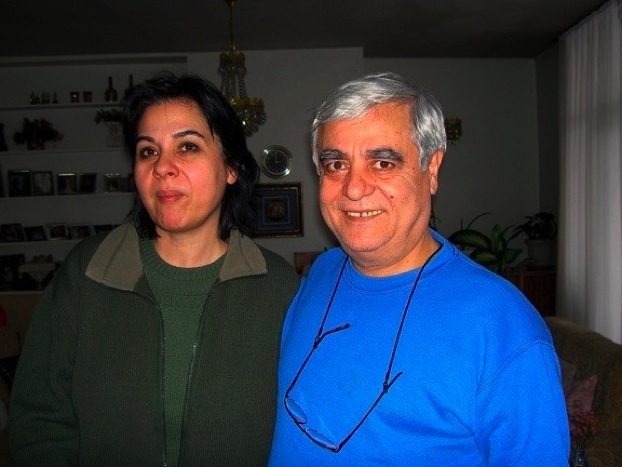
Birnur ve abisi Timur

BİRNUR VE ABİSİ

      Abim Timur Sumer, o gün de akşamı etmiş, yatmaya hazırlanmaktaydı. Uykuya geçmeden önce yapması gereken mühim işlerini tamamlamıştı. Allah kabul ederse önce dişlerini fırçalamış, sonra da üç adet kız kardeşini yataklarının altındaki öcülerden haberdar etmiş ve  itina ile hazırladığı lokumlu sandviçini yatakta yemek üzere pijamasının cebine yerleştirmişti. Bisküvi arası lokumundan bir ısırık alıp, karşı yatakta uyumaya hazırlanan kardeşi Oya’ya;

-Yatağının altındaki korkunç öcülere rağmen iyi uykular temenni ederim diye seslendi. 

     Muhtemel bir baba baskınına tedbir alaraktan, Coğrafya kitabının arasına Tommiks’in Lanetli Ada macerasını yerleştirip yattı. Uykuya dalmadan önce; bisküvi arası lokum ve Coğrafya arası Tommiks, bünyesine pekiyi gelmekte idi. Allah şifalar versindi. 
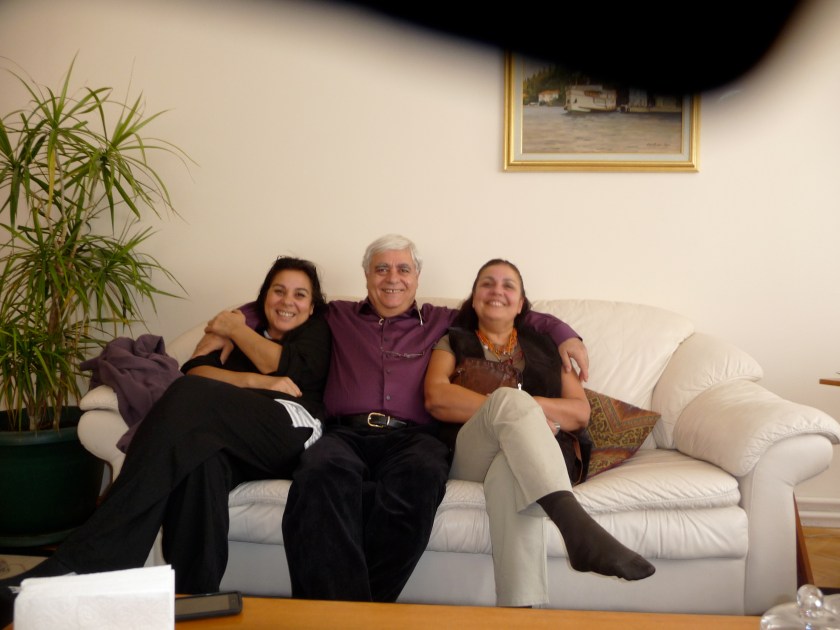
   BIR-SULEBİRNUR, ŞULE, TİMUR                                         

       Babasının yan odadan gelen sekiz silindirli ve bin beş yüz beygir çekiş güçlü traktör kıvamındaki horultusuna güvenerekten, Yüzbaşı Tommiks ve Konyakçının maceralarına dalıp gitmişti ki, odanın kapısı aniden açılıverdi. Daha önceki tecrübelerinin ışığı altında çizgi romanını derhal yastığın altına tıkıştırıp, Coğrafya kitabını bağrına basan Timur, babasına iyi geceler demek üzere kapıya doğru döndü. Hii, Allah muhafaza bir de ne görsündü? 
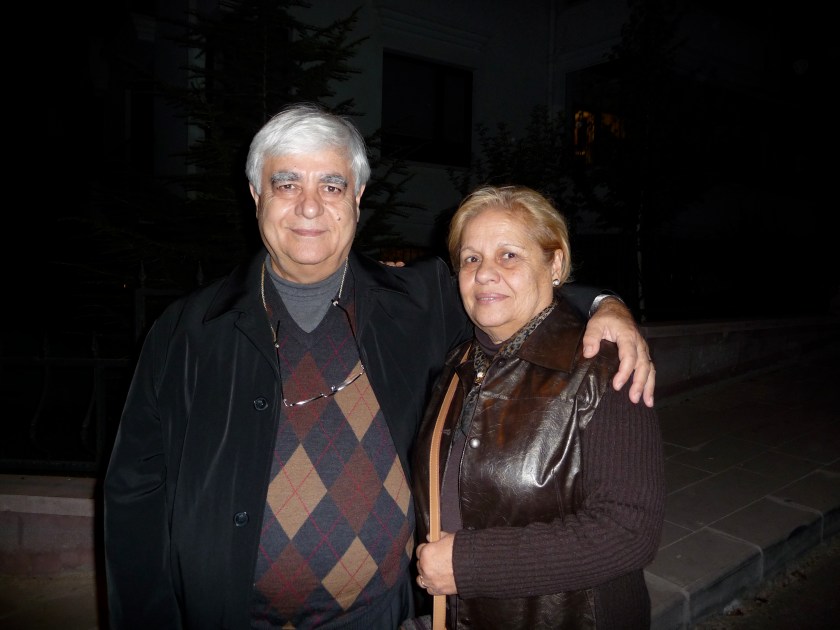
OYA

OYA VE TİMUR


      Coğrafya hocası Ömer Bey çizgili pijaması, terlikleri ve rabbiyesiri silinmiş suratı ile kapıda dikilmekte idi. Besbelli, Timur’a 0,5 ten 1’e tamamlayarak verdiği sözlü notu yüzünden adamı uyku tutmamıştı. Fazladan verdiği yarım notu geri almaya mı gelmişti neydi? Hocasının gece vakti odasına teşrifinden gayet etkilenen Timur, derhal yatağın üstüne çıkıp saygı duruşuna geçti ve hayretler içerisinde sordu:

  • Hocam gecenin kör vaktinde bizim evde ne işiniz var? Zahmetler olmuş, ben yarın okula gelirdim valla. Yazılı mı yapacaksınız, sözlü mü?

Coğrafyacı Ömer, hiddetle bağırdı:

  – Başlatma yazılından sözlünden uyku sersemi tembel adam!  Sınıfta bırakmadan önce sana son bir şans vereceğim. İn o yatağın üstünden, düş önüme uzaya gidiyoruz. Sana oralardan dünyanın kaç bucak olduğunu göstereceğim. Meridyenlerin paralellerin dizilişini karşıdan görerek daha iyi idrak edersin inşallah.

   Timur, tevekkül içinde yataktan atlayarak, terliklerini giyip Ömer Beyin önüne düştü. İçinden:

  • Hadi bakalım hayırlı işler Timurcuğum oğlum dedi kendi kendisine. Hapı yuttuk, demek kaderde ve müfredatta bu da varmış. Uzaya gidip, orada da Coğrafyacı Ömer’in rahle-i tedrisinden geçeceğiz. Zaten bu adam kaç senedir dünyayı bana dar etti. Bakalım fezada sözlü yapıp kaç verecek. 

    Birlikte bahçeye çıkıp, kapıda bekleyen uzay aracına bindiler.


-Yahu hocam, bari evdekilere haber verseydim. Şule’yi muleyi yanıma alsaydım. Gidip de dönmemek var, gelip de bulmamak var diyecek oldu ki, hocası elinin tersiyle ensesine bir şaplak attı ve

_ Yürü! Çok konuşma tembel teneke. Işık hızı ile gidip döneceğiz. Anan- baban biz dönene kadar uyanmazlar. Gece vakti sana özel ders veriyorum. Parasını babandan alacağım gör bak dedi.

Timur uyku sersemi sızlandı:

  • Hocam be, ben bu coğrafyayı hiç sevmem esasen. Söz veriyorum, billahi de doktor olacağım. Astronomi işine otuz sene sonra el atmayı planlıyorum. Gitmesek olmaz mı? Of be, bu ne şeb-i yeldadır yarabbi.

        Coğrafyacı Ömer, pijamasını çekiştirip uzay  aracının şoför mahalline geçti ve biçare talebesini tekrar azarladı:

  • Ben şimdi sana göstereceğim Holmes’in kuyruklusunu kuyruksuzunu boyu devrilesice deyip, gaza bastı. 

İris Nebulası’nı sollayıp, Timur’un Neptün ile Plüton’un komşu olduğunu iyice anlaması için Satürn’de bir çay molası verdiler.


Zambiya’nın bitki örtüsüne ve Adıyaman’ın yeryüzü şekillerine Uranüs cephesinden bir bakış fırlattılar.          Coğrafyacı Ömer, kâinatın her köşesinde aynı Coğrafyacı Ömer’di. Hem zalimdi, hem haindi. Abiciğime dünyanın da, fezanın da kaç bucak olduğunu göstermiş ve sözlü notu olarak yine 1,5 dan 2 vermişti. Işık hızı ile dünyaya dönüş yolunda, her daim olduğu gibi;

-Sana kanaatim yok Timur Sümer, allah seni bildiği gibi doktor yapsın dedi.

  Bir türlü sabahlar olmamıştı be. Yahu birader bu ne Şeb-i Yelda idi.   

   Annesinin:

  • Timur kalk, sabah oldu okula geç kaldın, yorganın yere düşmüş, açıkta kalmışsın seslenişine şöyle cevap verdi;
  • Hocam atmosferde yanan bir göktaşı görüyorum. Saman Yolu’nun köşesinden sağa sapın da eve dönelim.


Abiciğim doğum günün kutlu olsun.

                                        Birnur
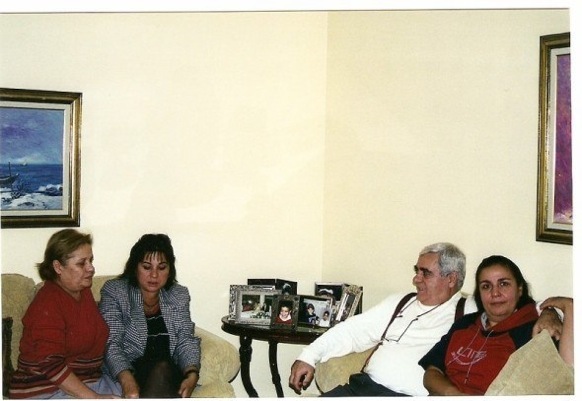
 4 KARDES


BAD RESEARCH BAD REPORTER : “KNEE SURGERY DOES VERY LITTLE..”

FIRST OF ALL, THIS IS NOT A “NEW STUDY” AS PAM BELLUCK CLAIMS BUT IT IS A STUDY PUBLISHED IN NEJM ON JULY 11,2002.

J. Bruce Moseley, M.D., Kimberly O’Malley, Ph.D., Nancy J. Petersen, Ph.D., Terri J. Menke, Ph.D., Baruch A. Brody, Ph.D., David H. Kuykendall, Ph.D., John C. Hollingsworth, Dr.P.H., Carol M. Ashton, M.D., M.P.H., and Nelda P. Wray, M.D., M.P.H. 

“N Engl J Med 2002; 347:81-88July 11, 2002 ” ENTITLED:

“A Controlled Trial of Arthroscopic Surgery for Osteoarthritis of the Knee”

(PLEASE CLICK BELOW)

SHAM KNEE SURGERY

CORRECTION:

THERE INDEED IS A NEW STUDY (PLEASE CLICK) FOR THE NEW UNETHICAL STUDY.

THE NEW STUDY REPEATING THE 2002 STUDY

SECONDLY; THIS STUDY IS NOT FROM FINLAND BUT IT IS CARRIED OUT IN HOUSTON VETERANS AFFAIRS MEDICAL CENTER. (CORRECTED ABOVE WITH THE NEW STUDY) I GUESS IT IS ACCEPTABLE TO TO CARRY OUT THIS BORDERLINE UNETHICAL STUDY IN THE VETERANS HOSPITAL BECAUSE THE PATIENTS (ALL MALE) ARE VETERANS AND THEIR LIFE DOES NOT CARRY MUCH VALUE (!) “PLACEBO” GROUP WERE GIVEN RISKY ANESTHESIA AND A “SHAM” SURGERY” HAS BEEN PERFORMED ON THEIR KNEES.

THIRDLY ; RESULTS OF AN INVASIVE AND OBJECTIVE PROCEDURE, INVOLVING “SURGICAL INCISION” AND “ANESTESIA”  HAVE BEEN EVALUATED BY VERY SUBJECTIVE RESULTS SUCH AS HOW MUCH PAIN PATIENT EXPERIENCES. THIS IS NOT AN ACCEPTABLE RESEARCH METHODOLOGY.

I BELIEVE MS. BELLUCK IS ON THE BANDWAGON WITH THE CURRENT POLITICAL TRENDS WHICH IS, “MEDICAL RESEARCH SHOULD BE AIMED TO DECREASE EXPENSES” RATHER THAN FINDING NEW TREATMENTS, AND SURGICAL TECHNIQUES TO IMPROVE PATIENT CARE AND HELP THE PROGRESS IN MEDICINE.  

WITH “AFFORDABLE CARE ACT”, IT WILL NOT BE SURPRISE TO SEE THE RESEARCH FUNDS TO BE GIVEN FOR THIS KIND OF RESEARCH WHICH WILL NOT HELP THE REAL ADVANCEMENT OF MEDICINE BUT SUPPOSEDLY DECREASE THE EXPENSES.

I AM NOT SAYING  DECREASING MEDICAL EXPENSES IS NOT IMPORTANT, BUT WRITERS LIKE PAM BELLUCK CLEARLY DECEIVES PUBLIC IN ORDER TO PROMOTE HER POLITICAL AGENDA.

CONTINUE READING:

“Common Knee Surgery Does Very Little for Some, Study Suggests”

By 
Published: December 25, 2013

A popular surgical procedure worked no better than fake operations in helping people with one type of common knee problem, suggesting that thousands of people may be undergoing unnecessary surgery, a new study in The New England Journal of Medicine reports.

The unusual study involved people with a torn meniscus, crescent-shaped cartilage that helps cushion and stabilize knees. Arthroscopic surgery on the meniscus is the most common orthopedic procedure in the United States, performed, the study said, about 700,000 times a year at an estimated cost of $4 billion.

The study, conducted in Finland, involved a small subset of meniscal tears. But experts, including some orthopedic surgeons, said the study added to other recent research suggesting that meniscal surgery should be aimed at a narrower group of patients; that for many, options like physical therapy may be as good.

The surgery, arthroscopic partial meniscectomy, involves small incisions. They are to accommodate the arthroscope, which allows doctors to see inside, and for tools to trim torn meniscus and to smooth ragged edges of what remains.

The Finnish study does not indicate that surgery never helps; there is consensus that it should be performed in some circumstances, especially for younger patients and for tears from acute sports injuries. But about 80 percent of tears develop from wear and aging, and some researchers believe surgery in those cases should be significantly limited.

“Those who do research have been gradually showing that this popular operation is not of very much value,” said Dr. David Felson, a professor of medicine and epidemiology at Boston University. This study “provides information beautifully about whether the surgery that the orthopedist thinks he or she is doing is accomplishing anything. I think often the answer is no.”

The volunteer patients in the Finnish study all received anesthesia and incisions. But some received actual surgery, others simulated procedures. They did not know which.

A year later, most patients in both groups said their knees felt better, and the vast majority said they would choose the same method again, even if it was fake.

“It’s a well-done study,” said Dr. David Jevsevar, chairman of the committee on evidence-based quality and value of the American Academy of Orthopaedic Surgeons. “It gives further credence or support to a number of studies that have shown that giving arthroscopy to patients is not always going to make a difference.”

Dr. Jevsevar, an orthopedic surgeon in St. George, Utah, said he hoped the study would spur research to better identify patients who should have surgery.

“Are there operations that are done that do not need to be done? I’m sure that’s the case, but we don’t know the magnitude,” he said. “We still think there’s benefit in arthroscopic meniscectomy in appropriate patients. What we need to define in the future is what’s the definition of appropriate patient.”

One factor is whether pain is caused by the torn meniscus or something else, especially osteoarthritis, which often accompanies tears. Another possible consideration is whether mechanical knee function is affected.

“Take 100 people with knee pain; a very high percentage have a meniscal tear,” said Dr. Kenneth Fine, an orthopedic surgeon who also teaches at George Washington University. “People love concreteness: ‘There’s a tear, you know. You have to take care of the tear.’ I tell them, ‘No. 1, I’m not so sure the meniscal tear is causing your pain, and No. 2, even if it is, I’m not sure the surgery’s going to take care of it.”

Dr. Fine added: “Yours truly has a meniscal tear. It just causes pain. I’m not having any mechanical symptoms; my knees are not locking. So I’m not going to let anybody operate.”

He likened the recent studies to attempts to educate people that “it’s not really good to take antibiotics for the common cold. There’s a lot of pressure to operate. Financial, obviously. But also, if a primary care doctor keeps sending me patients who are complaining of knee pain and I keep not operating on them, then the primary care doctor is going to stop sending me patients.”

The new research builds on a groundbreaking 2002 Texas study, showing that patients receiving arthroscopy for knee osteoarthritis fared no better than those receiving sham surgery. A 2008 Canadian study found that patients undergoing surgery for knee arthritis did no better than those having physical therapy and taking medication. Now many surgeons have stopped operating on patients with only knee arthritis.

Earlier this year, a study at seven American hospitals found that patients with meniscal tears and osteoarthritis did not experience greater improvement with surgery than those receiving physical therapy, although after six months, one-third of the physical therapy group sought surgery. (Their surgical results were not reported.)

An author of that study, Dr. Robert Marx of the Hospital for Special Surgery, said his conclusion was that often physical therapy should be tried before surgery. Still, “properly selected patients do benefit from knee arthroscopy,” he said. “When you have someone who doesn’t have arthritis and they have a painful meniscal tear, you’re going to make that person very happy.”

Dr. Marx expressed some skepticism about the Finnish study, which involved patients with only meniscal tears, not perceptible arthritis. He wondered if the tears were small or if the pain was caused by the kneecap, adding, “I cannot believe that this would be the same population of patients I would operate on.”

Dr. Teppo Jarvinen, an author of the Finnish study, said whether meniscal tears caused the participants’ pain was unknown, but arthritis was an unlikely cause, since they seemingly had none. About 10 percent of meniscal tear patients have no arthritis, he said.

The study involved five hospitals and 146 patients, ages 35 to 65, with wear-induced tears and knee pain. About half had mechanical problems like locking or clicking knees.

Most patients received spinal anesthesia, remaining awake (one hospital used general anesthesia). Surgeons used arthroscopes to assess the knee. If it matched study criteria, nurses opened envelopes containing random assignments to actual or sham surgery. In real surgery, shaver tools trimmed torn meniscus; for fake surgery, bladeless shavers were rubbed against the outside of the kneecap to simulate that sensation. Nobody evaluating the patients later knew which procedure had been received.

After a year, each group reported similar improvement, even those with clicking or locking knees. Two in the surgery group needed further surgery; five in the sham group requested surgery. Dr. Jarvinen acknowledged the possibility that fake surgery had some placebo effect but said results were too strong for that to explain everything.

Dr. Frederick Azar, first vice president of the orthopedic surgeons academy, said the study focused on a minority of patients, those he already did not operate on; he operates mostly on patients with mild to moderate arthritis whose meniscal tears appear to be causing pain.

“Arthroscopy is a very useful tool,” he said. Still, he said, “I’m sure there are some physicians who may look at this and say it may change the way they approach their patients, in terms of surgery or not surgery.”


DR. MERT EROĞUL : “ECZEMA AND HOLY WATER”

Private Lives

Private Lives:Personal essays on the news of the world and the news of our lives.

TAGS:

My 9-month-old son’s first time on a plane — a 10-hour journey from J.F.K. to Istanbul — was a disaster. The dry air of the cabin, the confinement and possibly some allergen on the in-flight menu all contributed to an unprecedented eruption of his eczema. It was demoralizing. His skin had been cracking and inflamed for months, but we had taken such pains with it — daily applications of heavy cream and austere dietary restrictions — in anticipation of introducing him to his relatives in Turkey.

We stayed at my mother-in-law’s on the European side of Istanbul. After just a few days, she was as obsessed as we were with the daily moisturizing routine. Then she announced that she had a solution: we must visit a Greek Orthodox priest and have the baby blessed. My mother-in-law, like both our families, is a nonpracticing Muslim, but this priest had distinguished himself by getting a friend’s daughter married off by praying for her. I looked at my wife, unsure of what to say.

We live in Brooklyn. Neither of us is religious. I am a medical doctor. I have never met a priest in my life. Yet my mother-in-law was insistent, and my wife was curious.

Andrew Holder

So despite my skepticism, we found ourselves inside the Hagios Demetrios, an unremarkable old church on a hill overlooking the Bosporus. The gloomy little church smelled like incense and old people, of which there were many. They were lined up and hunched over in the foyer, patiently waiting for an audience with the priest. They all seemed to have rheumatism. We waited, too, the baby growing restless. I felt sad for these superstitious people and impatient to finish. Eventually a voice in accented Turkish announced that the priest would be seeing the babies first, and with that we pushed, as New Yorkers do, to the front of the line.

The priest, a tall robed figure surrounded by lesser robed figures, turned and looked at us as we entered. He had black hair and a black beard speckled with gray. He beckoned us over, my wife told him why we were there, and then I was acutely aware of everything in the room, all the people and the ornaments, the sunlight spilling in through stained glass. How it must have looked just like this hundreds of years ago. I was aware of the history of countless people, Christians, Muslims and Jews, who had stood where I was, hoping for a blessing. I remembered all my worry and frustration, my powerlessness to fix my own son despite everything I knew about medicine. The priest nodded and reached for my hand and took my wife’s hand and he pulled us near. He put his palm on the baby’s forehead.

He said, “Don’t worry. Everything is going to be all right.” A bit of my son’s drool dripped onto my wrist. “You know, my daughter had terrible eczema, and I took her to several dermatologists until finally a doctor in Bakirkoy figured out that she was allergic to her stuffed toy. When we got rid of it her skin cleared up.” He smiled at me. “Anyway, these skin conditions get better when they’re like 2 years old.” He put his hand on my shoulder and I smiled back.

We thanked him and turned to each other. We held the baby and felt lighter. The priest mumbled a benediction, made a sign and then politely motioned us to a door behind him. I had heard about this door. It led to a long and low tunnel dug into the hill, lit by occasional electric lights that illuminated the damp walls on which were inscribed centuries of prayers that people had left. Who knows how many of them had been answered.

We had to walk hunched over for what felt like hundreds of feet through this tunnel, and at the end was a brass spigot that I could not seem to operate. It was stuck tight. Nor could my wife turn it. It fell to the child’s grandmother, who twisted it easily and collected the holy water in a bottle she had brought, and we washed the baby’s skin.

Months later, back in Brooklyn, we still have that bottle of holy water. It sits, next to the infant Motrin and Tylenol, on a shelf near the baby’s bed.

Mert Eroğul, MD

ESNEME PATOFİZYOLOJİSİ ÜZERİNE BİR TEZ

ESNEME PATOFİZYOLOJİSİ ÜZERİNE BİR TEZ

635px-Edgar_Germain_Hilaire_Degas_084

Sevgili Hacettepezede’ler:
Sükutumuzdan ibret çıkaramayıp da, geceleri “aya”
bakıp “lak lak” ettiği yüzünden, “aylak” unvanına
müstehak Timur’a cevabımızdır:

“Kemalin fidda ise sükutun zahep
Kemal ehli kemalını sükutla buldu hep”

Biz aylak olmadığımızdan, “esnemenin bulaşıcılığı”
üzre yapmakta olduğumuz bilimsel araştırmalar
nedeniyle,heyhat, gurubumuzdan bir süredir ayrı
kalmış bulunmakatayız. Hüda’miza şükürler olsun ki
nihayet araştırmalarımızı bitirmiş ve haddimiz
olmadan insanlığın hizmetine sunmuş bulunmaktayız.
Malumunuz, geçmiş zaman olur ki, anatomi, biyokimya,
KBB gibi derslerde, kırmızı anfi içre ders dinleyen
öğrencilerden bir tanesi hele bir esnemeye görsün;
bu durumda, Emin Kansu hariç, tüm anfi ahalisinin
sırayla esnediklerini hepiniz defalarca gözlemlemişsinizdir.
Naçizane yaptığımız araştırmalar, bu vetirenin
patofizyolojisini şöyle açıklamaktadır efendim.
Esneme olayı, anlatılan dersin ağırlığı ile anfinin hava
yoğunluğunun artması, ve nevazul gibi bir nedenle
Östaki borusu tıkanmış herhangi bir öğrencinin orta
kulak ile dış kulak yolu arasındaki atmosferik
tazyikin değişmesine sebep olmasıyla başlamaktadır.
Mazlum öğrenci, ki bu çoğu kez Selahattin Selim
olup, kulak zarının iki yanındaki basıncı eşitlemek
muradıyla bir güzelce esneyip Östaki borusunu açtığı
takdirde, işbu bahane ile anfideki havanın
Selahattin’in Östaki borusundan orta kulağı cihetine
girmesiyle,haliyle, anfi içindeki hava tazyiki de
düşeceğinden, haydi bakalım, tüm öğrencilerin orta
ve dış kulak basınçları değiştiği halde, külliyesi
birden esnemeye ayaz etmektedirler.
Bu bilimsel araştırmamızı okuyanların esnemelerinin
nedeni ise ayrı bir araştımamız konusudur ki, hak-i
payinize pek yakında Nobel ödülü verilirse sakın ola
şaşmayasız. Timur ise gönderdiğimiz lokumları
tazakkum eder iken hasedinden çatlasın gerektir.
Yarı insan yarı hayret bu şi,
Yücel

DENİZLİ HOROZU

 Denizli’de araştırma yapmak için kamp kuran bir grup üniversite öğrencisi, kamp yakınına tüneyen bir Denizli horozunun sabahın erken saatlerinde yüksek sesle ötmesinden çok rahatsız olmuşlar…

Sabahın köründe ortaya çıkan horoz, önce dikleniyor, sonra dakikalarca ötüyormuş…
Tabii ekipte ne uyku ne de huzur bırakmıyormuş…
Sonunda sabırlar tükenmiş… 
Susturmak için başlamışlar horozu kovalamaya… Horoz önde.. Gençler peşinde… 
Mahalle arasına dalmışlar… Kovalamacayı gören, fakat bir anlam veremeyen yaşlı dede, seslenmiş: 
– Hey, evlatlar!.. Bu zavallı horozu niye ürkütüyorsunuz?.. 
– Dede, sabahın köründe ötmeye başlıyor, kampı ayağa kaldırıyor. O yüzden başını keseceğiz!.. 
– Yazıktır evladım yapmayın!.. demiş ihtiyar, bırakın, ben onun sesini keserim, bir daha da rahatsız etmez sizi…
Gençler bunun üzerine kovalamayı bırakmışlar. 
Ertesi sabah, hafif “gak – guk” sesleri dışında horozdan kayda değer hiçbir ses çıkmadığını görünce de şaşırıp dedeye koşmuşlar: 
– Yahu dede, ne yaptın da bu horozun sesini kestin?.. 
İhtiyar gülmüş:
– Kıçına zeytinyağı sürdüm, horoz kabararak ötmeye yeltendiğinde, gerisi tutmuyor ki kuvvet alsın… Ancak “gak – guk” edebiliyor..

Kıssadan hisse: 
Arkan sağlamsa, istediğin kadar kabarır, diklenir, sözünü dinletirsin.
Ama bir gevşemeye görsün, ancak “gak-guk” edersin…

OBAMA CARE IN A NUTSHELL

OBAMA-CARE COVERAGE IN A NUTSHELL

The phone rings and the lady of the house answers, “Hello.” ”Mrs. Sanders, please.” ”Speaking.” ”Mrs. Sanders, this is Doctor Jones at Saint Agnes Laboratory. When your husband’s doctor sent his biopsy to the lab last week, a biopsy from another Mr. Sanders arrived as well. We are now uncertain which one belongs to your husband. Frankly, either way, the results are not too good.” ”What do you mean?” Mrs. Sanders asks nervously. “Well, one of the specimens tested positive for Alzheimer’s and the other one tested positive for HIV(AIDS). We can’t tell which is which.” ”That’s dreadful! Can you do the test again?” questioned Mrs. Sanders. “Normally we can, but Obamacare will only pay for these expensive tests one time.” ”Well, what am I supposed to do now?””The folks at Obamacare recommend that you drop your husband off
somewhere in the middle of town. If he finds his way home, don’t sleep

ANTI VACCINATION MOVEMENT

Anti-Vaccination Movement Causes a Deadly Year in the U.S.

Published on December 3, 2013
From Taliban fighters to California soccer moms, those who choose not to vaccinate their children against preventable diseases are causing a public health crisis.

Disease outbreaks have killed millions of people, and scientists have spent generations developing ways to save those in jeopardy. Still, many people don’t think it’s a good idea to protect themselves or their children from preventable diseases, and choose to forego vaccinations.

Even in 2013, the anti-vaccination movement continues to leave the door open to outbreaks of diseases that have been all but eradicated by modern medicine. These diseases include measles, polio, whooping cough, and more.

In Pakistan, polio remains an epidemic because the Taliban has banned aid workers from vaccinating children. They say they fear that vaccination efforts are simply a ruse meant to disguise espionage. Health workers attempting to distribute vaccines there have been attacked and killed. A total of 101 polio cases have been reported in the country as of mid-November, and another 240,000 children have not been vaccinated.

But it’s not just militants abroad who are endangering public health by skipping out on vaccinations.

Know More: The 10 Worst Outbreaks in U.S. History »

When Pseudoscience Becomes the Norm

In 1998, British journal The Lancet published research by Dr. Andrew Wakefield that purported to show that the measles, mumps, and rubella (MMR) vaccines caused autism in some children. The study was widely reported and the information spread like wildfire among parents, especially those with autistic children.

One of the loudest broadcasters of this supposed link between vaccines and autism is actress Jenny McCarthy, who has campaigned in support of Wakefield’s findings as recently as 2011.

The problem with Wakefield’s study, however, was that it relied on faulty data. Later investigations have shown that Wakefield was set to benefit from lawsuits based on his research. The study was retracted after numerous other scientists could not replicate his findings.

Since then, no other medical research has shown a link between vaccines and mental disorders. Nevertheless, many parents still hold reservations about vaccinating their children. Wakefield’s paper has been linked to declines in vaccination and a corresponding increase in measles cases.

In March, the U.S. Centers for Disease Control and Prevention (CDC) released a study showing that an aggressive vaccination schedule does not contribute to an increase in autism incidence.

CDC VACCINATION LINK (CLICK) Read What the CDC Has to Say About the Autism-Vaccine Link »

There are, however, a few real reasons why certain children should avoid vaccinations; specifically, those who are undergoing medical treatment or are still too young.

Outbreak Clusters Appear Among the Unvaccinated

Earlier this year, researchers confirmed that a 2010 whooping cough outbreak in California, the nation’s worst in over 50 years, was spread by children whose parents applied for non-medical exemptions to school vaccination requirements, many for religious reasons.

The study showed that more cases of whooping cough occurred in the clusters of unvaccinated children than not, resulting in 9,120 instances of the disease and 10 deaths. In San Diego county alone, there were 5,100 exemptions and 980 whooping cough cases.

In August, the Texas megachurch Eagle Mountain International Church made headlines after 21 members of its congregation contracted measles. Coincidently, the outbreak occurred during National Immunization Awareness Month.

The church, part of Kenneth Copeland Ministries, advocated abstaining from vaccinations over fears that they can cause autism. The outbreak was traced back to a church member who had traveled abroad on a mission trip and then spread measles among the unvaccinated congregation.

Following the outbreak, the church hosted vaccination clinics and urged its members to attend.

Vaccines Safe for Pregnant Moms

Also this year, a review of data from the 2009 flu season showed that the use of flu vaccines can help prevent fetal death, a major concern for pregnant mothers. For years, pregnant women have been unsure about whether getting the flu shot could harm their unborn child.

The report, published in the New England Journal of Medicine, also confirmed the safety of flu vaccinations for women in the later stages of pregnancy.

Hopefully, the next generation of parents will opt to protect themselves and their children from diseases we should no longer be worrying about.

See the CDC’s Findings on Flu Shots and Pregnant Women »

NEXT FRONT IN CANCER CARE

The Next Front in Cancer Care

As More Patients Survive, Cancer Centers Handle Disease’s Knock-On Effects

By 

LAURA LANDRO


Dec. 9, 2013 7:34 p.m. ET
For cancer patients, getting through the rigors of treatment is the first hurdle. Then, life as a cancer survivor poses its own daunting physical and emotional challenges.

A growing number of hospitals and community cancer centers, which treat the majority of the nation’s cancer patients, are launching survivorship-care programs. These include treatment follow-up plans, physical rehabilitation and emotional assistance, such as counseling and support groups. They resemble programs currently offered by big urban cancer centers like MD Anderson in Houston and Memorial Sloan-Kettering in New York.


As more cancer patients are treated successfully, treatment centers are focusing on the next phase and discovering it can pose daunting challenges that require new approaches to care. Laura Landro explains on Lunch Break. Photo: Greenville Health System.

Chemotherapy and radiation can damage vital organs such as the heart and liver, possibly causing secondary diseases years later. The body can be debilitated, cognitive functions impaired and emotions distressed, making return to normal life and work difficult. Some 70% of cancer survivors experience depression at some point. Patients have higher levels of anxiety years after the disease is cured. And there is always the chance that cancer will return.

More patients are expected to face such health issues as the number of cancer survivors grows, partly due to improved early detection and treatment.

The Commission on Cancer, a consortium of professional organizations that accredits U.S. cancer centers treating 70% of newly diagnosed patients, will begin in 2015 requiring that they provide survivorship-care plans for their patients.

“I tell patients now we are going to follow you for your entire lifetime,” says W. Larry Gluck, an oncologist and medical director of the Greenville Health System’s Cancer Institute, in Greenville, S.C., which set up a Center for Integrative Oncology and Survivorship in 2011. “The mental and physical needs of cancer patients go on long after therapy has been completed.” In the past, patients typically were sent back to their family doctor, who might have little knowledge of delayed side effects or complications of treatment and recurrence risks, Dr. Gluck says.

There are close to 14 million cancer survivors living in the U.S., a number that is expected to grow to 18 million by 2022, according to the National Cancer Institute. About 40% have been alive 10 years or more after diagnosis (including this reporter, a leukemia survivor).

Private health insurers and Medicare typically cover cancer patients’ medical visits, during which some survivorship-care planning can take place. Cancer centers say some private insurers consider survivorship planning a necessary service. A bill currently in congressional committee, the Planning Actively for Cancer Treatment Act would require Medicare to cover care-planning services at diagnosis and once cancer patients finish treatment.

Nonprofit groups like Cancer Support Community, which was formed in 2009 through the merger of two of the largest support organizations, Gilda’s Club and the Wellness Community, offer free services including personalized assessment and care plans, distress screening, support groups and complementary therapies such as yoga and meditation. Last year, it announced a partnership with Greenville to incorporate its services into the hospital system as part of the recent survivorship center.

“Cancer hospitals are realizing that they have to be a one-stop shop, taking care not just of the body, but of the mind and soul of the survivor,” says Kim Thiboldeaux, chief executive officer of Cancer Support Community.


After being treated at the Greenville, S.C., Cancer Institute last year, Renee Gossman says yoga classes at the institute’s survivorship center helped her regain strength. Greg Beckner

Renee Gossman, 71, a personal trainer who teaches water aerobics, was diagnosed at the Greenville Cancer Institute with uterine cancer in January 2012. She had a hysterectomy, chemotherapy and radiation. Ms. Gossman, who doesn’t have a lot of family living nearby, says she was fatigued and felt isolated during nearly a year of treatment. “You get through all of that, and then it’s like, what’s going to happen now?” she says.

Ms. Gossman says her oncologist, Larry Puls, referred her late last year to Greenville’s survivorship center where she met with a social worker, a nurse navigator and a dietitian. She received a summary of her treatment, copies of her pathology reports, a follow-up plan and a summary of other programs and activities she might find helpful.

“They give you a team of people who are going to look after you, get you back involved in the world and see to your physical, social and emotional needs,” Ms. Gossman says. She started a 12-week exercise program at the center that focuses on restoring aerobic conditioning, muscular strength and flexibility. She also began taking yoga classes and a writing workshop through the Cancer Support Community program at Greenville. Ms. Gossman currently volunteers once a week as a greeter in the lobby of the cancer institute.

Other services offered at Greenville include free nutrition counseling and help with the after-effects of specific cancers, such as swelling, called lymphedema, that often occurs after breast-cancer surgery.

Patients, and their caregivers, are encouraged to use the survivorship center as a resource, says Regina Franco, a nurse practitioner and manager of the survivorship center. “If you hear on the news that you should be taking vitamin E, call us and ask, ‘Is this really something I should be doing?’ “

Greenville recently joined with researchers at the University of South Carolina to open a human-performance lab that will assess patients before and after treatment, billed as an office visit.

One area of research: how cancer and chemotherapy affect energy production at the cellular level and how exercise might restore some of the damage. Also being studied is the impact of complementary therapies such as yoga, massage and acupuncture, Dr. Gluck says.

Many smaller cancer centers and oncology practices are using a software program called Journey Forward, created by a group of advocacy organizations and health companies, to create customized follow-up plans. The program, which includes resources for both doctors and patients, has been downloaded about 30,000 times since it was launched in 2009, says Shelley Fuld Nasso, chief executive of the nonprofit National Coalition for Cancer Survivorship, which helped develop the software. For cancer survivors, “things can come up many years down the road that you aren’t expecting or prepared for,” she says.

Write to Laura Landro at laura.landro@wsj.com